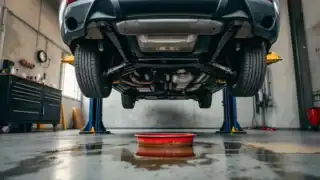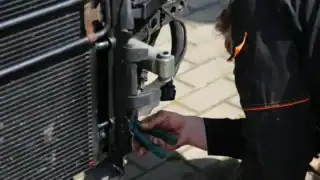
A European vehicles cooling system flush is one of those services that often gets skipped until something goes wrong. The cooling system in a European car or SUV does more than stop the engine from overheating — it also protects internal components from corrosion, lubricates the water pump, and helps regulate cabin heating. In Gatton and across the Lockyer Valley, vehicles covering high kilometres on the Warrego Highway or running hard through summer heat put real demand on their cooling systems. Keeping that coolant clean and in spec is straightforward maintenance that pays off over the life of the vehicle.
What Happens When Coolant Gets Old?
Fresh coolant is chemically formulated to resist rust, inhibit scale build-up, and maintain a stable freeze and boil point. Over time, those protective additives break down. The fluid becomes acidic, and that acidity starts attacking metal surfaces inside the engine, radiator, and heater core. On European vehicles in particular, this matters more than many owners realise.
Many European manufacturers specify a silicate-free or OAT (Organic Acid Technology) coolant that is chemically distinct from the green or blue coolant used in older or more general vehicles. If the wrong fluid type was used in a previous service, or if the coolant hasn’t been changed in several years, you may already have degraded fluid working against the engine rather than protecting it.
Watch for these warning signs that a cooling system flush may be due:
- The temperature gauge climbing higher than normal, especially in slow traffic or on hot days
- Coolant that looks rusty, discoloured, or murky in the overflow reservoir
- A sweet smell from the engine bay or through the cabin vents
- The heater not producing enough warmth in winter
- Visible scale or residue around hose connections or the radiator cap
- A previous service history that has no record of a coolant change
Even without obvious symptoms, most European manufacturers recommend a coolant flush at set intervals – typically every two to five years depending on the model and the fluid type specified. Checking your logbook or service schedule for the manufacturer’s interval is the starting point.
How We Approach a European Vehicles Coolant Flush in Gatton
We don’t just drain and refill. A proper automotive cooling system flush involves flushing the old fluid out of the entire circuit – radiator, engine block, heater core, and hoses – not just what comes out of the drain plug. That distinction matters because old coolant sitting in the block or heater core will contaminate fresh fluid almost immediately if the system isn’t properly cleared.
For European vehicles, we pay close attention to the fluid specification. Brands like Volkswagen, BMW, Mercedes-Benz, Audi, Peugeot, and Volvo each publish specific coolant standards, and mixing incompatible types can cause gel formation or accelerated corrosion. We source coolant that meets OEM-equivalent specifications for the make and model in front of us, not just a generic product that happens to fit.
Our process includes:
- A visual inspection of hoses, the radiator cap, overflow reservoir, and visible connections for signs of wear or leakage
- Checking the existing coolant concentration and condition before we start
- A full system flush to clear degraded fluid and built-up deposits
- Refilling with the correct OEM-specification or equivalent coolant at the manufacturer’s recommended concentration
- Checking coolant levels and system pressure after the flush
- Noting any concerns found during inspection – leaking hoses, a worn cap, or signs of a weeping water pump – so you can decide how to address them
If we find anything that needs attention beyond the flush itself, we’ll tell you clearly what it is and what it involves before any work goes ahead. No surprises on the bill.
What Affects the Cost and Time for a Coolant Flush?
The main variables are the vehicle itself, the coolant specification it needs, and whether any issues are found during the inspection. European vehicles often require a specific coolant type that costs more than a generic equivalent – but using the wrong fluid to save a few dollars is a false economy when you’re protecting an engine that cost tens of thousands. The volume of coolant required also varies; larger engines and systems with integrated heater circuits hold more fluid.
If the inspection turns up a leaking hose, a worn radiator cap, or early signs of a water pump issue, addressing those at the same time as the flush usually makes more practical sense than coming back twice. We’ll always talk through the options with you.
Why Gatton Automotive Solutions for Your European Vehicle?
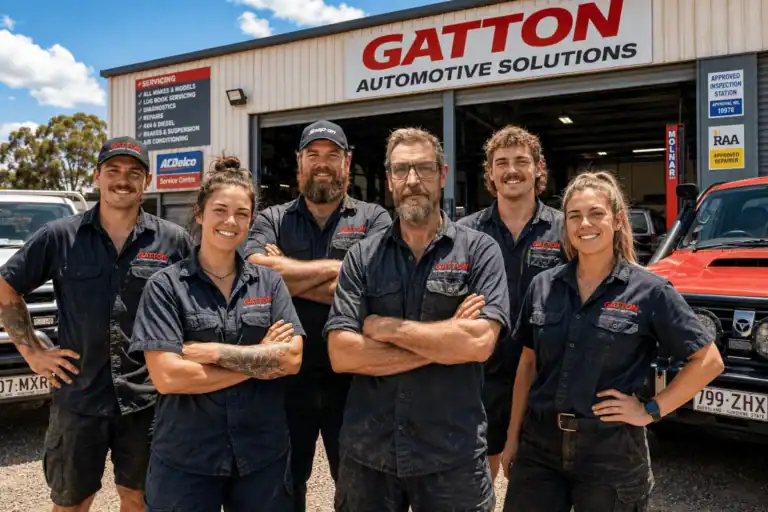
Gatton Automotive Solutions is a locally owned, full-service workshop with the capability to handle everything from everyday passenger cars to 4WDs, trucks, and heavy equipment. European vehicles are part of our regular workload – we work across makes and understand the fluid and specification requirements that come with them. Our parts sourcing is handled in-house, which means we can track down the right coolant type and any associated components without sending you elsewhere.
With five-star reviews, we’ve built a reputation in the Lockyer Valley for straight advice and work that’s done properly. From general mechanical work for everyday drivers through to heavy vehicle servicing, roadworthy certificates, smash repairs, custom paintwork, suspension upgrades, and tyre supply and fitting – it’s all handled under one roof. If your vehicle needs a cooling system flush and you’d rather not drive to Ipswich or Toowoomba to get it done right, we’re here in Gatton.
Ready to get it sorted? Book Your Free Inspection online or Call Us Now to talk through what your European vehicle needs – we’ll take care of it from here.