Limited Time: Free Windscreen Wipers With Any Service. Subject To Availability.

Locally Owned & Operated
Honest Upfront Pricing
5★ Reviews
All Makes & Models

Verified 5★ Reviews

Trusted Japanese Vehicles Cooling System Flush In Gatton

Cooling system flush removes old coolant and built-up deposits that reduce efficiency and reliability. We service Japanese vehicles to factory standards in Gatton, locally.

One-Stop Workshop

Honest Advice

5★ Reviews

Japanese Cooling Specialists

Book Your Free Inspection

Tell us what you need and we'll get back to you with a clear quote.

Booking Form
  • Vehicle Details
  • Confirm Vehicle
  • Services
  • Contact Details
Honest Quotes
All Vehicle Types
Local & Reliable

Why Book With Us

Book Your Free Inspection
Drop Off Your Vehicle
We Get to Work
Collect Your Car

A Japanese vehicles cooling system flush is one of those services that often gets overlooked until a problem shows up, but staying ahead of it is genuinely worth the effort. The coolant (also called antifreeze) circulating through your engine does more than keep temperatures down, it prevents corrosion inside the radiator, water pump, and engine block. Over time that fluid breaks down, becomes acidic, and starts attacking the very components it was meant to protect. For drivers in and around Gatton, where summer heat is no joke and plenty of vehicles are working hard on rural roads, keeping the cooling system in good shape is straightforward preventative maintenance that can save you from a much more expensive repair down the track.

Signs Your Japanese Vehicle’s Cooling System Needs Attention

Japanese vehicles, including Toyota, Nissan, Mazda, Mitsubishi, Subaru, and Honda, are known for their durability, but no cooling system lasts indefinitely without maintenance. The coolant degrades over time regardless of how well the engine is running.

Watch for these warning signs that a flush may be overdue:

  • Temperature gauge creeping higher than normal, especially during slow traffic or towing
  • Sweet smell from under the bonnet, which often indicates a coolant leak or overflow
  • Coolant that looks rusty, brown, or murky instead of its original colour (often red, pink, or blue depending on the type)
  • White residue or deposits around the radiator cap or hoses
  • Heater blowing cooler air than it should, which can point to low coolant or blocked circulation
  • Engine running warmer than usual after a recent top-up, suggesting the existing fluid is too degraded to do its job properly

If you notice any of these, it is worth getting the system inspected sooner rather than later. Overheating is one of the leading causes of serious engine damage, and Japanese engines, while generally very reliable, are not immune.

What Happens During a Cooling System Flush on a Japanese Vehicle?

The process goes well beyond draining the old coolant and refilling. Our team starts with a visual inspection of the radiator, hoses, coolant reservoir, radiator cap, thermostat housing, and water pump for any signs of leaks, cracks, or wear. In many Japanese vehicles, the water pump is driven by the timing belt rather than a separate serpentine belt, meaning pump condition is worth checking carefully as part of any cooling system service.

We then flush the system with a dedicated flushing agent that breaks down scale, rust, and old additive deposits built up inside the passages. Once the flush is complete and the system is properly drained, we refill it with the correct coolant specification for your vehicle. This is not a one-size-fits-all step. Toyota vehicles, for instance, typically call for their specific Super Long Life Coolant (SLLC), which is a different chemistry to the coolant used in many Nissan, Mazda, or Subaru models. Using the wrong type can actually accelerate corrosion rather than prevent it.

We also pressure test the system after refilling to check for any weeping leaks that may not be obvious during a visual inspection, and confirm the thermostat is opening and closing correctly. If anything needs attention, we will tell you straight and give you the full picture before any further work is done.

What Affects the Cost and Time Involved?

Several factors will influence how long the service takes and what it involves:

  • Vehicle model and cooling system capacity — larger engines and higher-capacity systems hold more coolant and take longer to flush thoroughly
  • Condition of the existing coolant — heavily degraded or contaminated fluid may need more than one flush pass to clear properly
  • Whether related components need attention — if the inspection turns up a worn hose, a weeping radiator, or a suspect thermostat, those parts will affect the overall scope
  • OEM-spec coolant versus quality aftermarket equivalent — we will discuss the right option for your vehicle and your budget

For most everyday Japanese vehicles, a cooling system flush is a relatively straightforward service. We will give you an honest read on time and cost before we start.

Why Gatton Drivers Bring Their Japanese Vehicles to Us

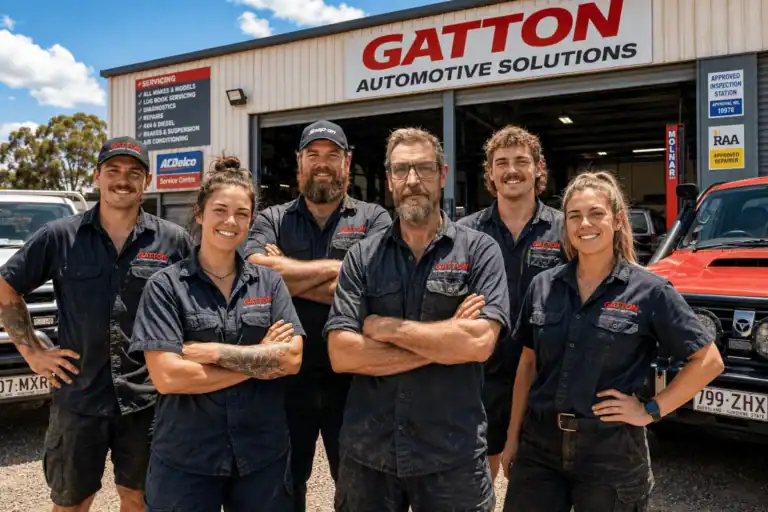
Gatton Automotive Solutions is a full-service workshop covering everything from everyday cars and 4WDs through to trucks, heavy equipment, and farm machinery. You will not need to drive to Ipswich or Toowoomba for a cooling system flush, a roadworthy certificate, a set of tyres, or anything else on the mechanical side. It all happens here, under one roof, with honest advice and straight pricing. We do not recommend work that is not needed, and we will not keep you guessing about what your vehicle actually requires.

With five-star reviews from local drivers, our reputation in the Lockyer Valley is built on doing the job properly and treating people fairly, whether it is a quick service or a more involved repair. Japanese vehicle owners across Gatton, Laidley, Forest Hill, Helidon, and the surrounding areas trust us to know their vehicles well and look after them accordingly.

If your coolant has not been changed in a while, or you have noticed anything unusual with your temperature gauge or heater, Call Us Now or Book Your Free Inspection online. We will take a look and let you know exactly where things stand for your vehicle right here in Gatton.
Other Services

Whatever your needs we have you covered, see some similar services below or click "See All Services" to explore our full service offering.

Your Local Workshop for Every Vehicle

Gatton Automotive Solutions is the one-stop shop for cars, 4WDs, trucks, and heavy equipment. Honest advice and fair pricing, right here in Gatton.

Honest Pricing, No Surprises

We tell you what’s needed and what it costs before we start. No upselling, no pressure.

Everything Under One Roof

Bring your car in and we’ll inspect it, explain what we find, and quote you upfront.

Japanese Vehicle Cooling Expertise

We know Japanese cooling systems and source the right parts to keep them reliable.

How Japanese Cooling System Flush Works

A straightforward four-step process to flush your cooling system, protect your engine, and get you back on the road.

Step 1

Book Your Free Inspection

Call Us Now or Book Your Free Inspection to discuss your cooling system and arrange a flush assessment.

Step 2

Cooling System Assessment

We inspect coolant condition, test for leaks, and check system pressure using Japanese vehicle-compatible diagnostics.

Step 3

Complete Cooling Flush

We drain old coolant, flush the entire system, and refill with manufacturer-spec fluid for your Japanese vehicle.

Step 4

System Check & Handover

A final pressure test confirms proper operation before your vehicle is ready to collect with reliable cooling restored.

Five-Star Rated

Verified 5★ Reviews

Quality Parts From Trusted Suppliers

We use genuine and quality aftermarket parts from reputable suppliers. You get reliable components backed by proper warranties.

Book Your Free Inspection

Tell us what you need and we'll get back to you with a clear quote.

Booking Form
  • Vehicle Details
  • Confirm Vehicle
  • Services
  • Contact Details
Honest Quotes
All Vehicle Types
Local & Reliable

Why Book With Us

Book Your Free Inspection
Drop Off Your Vehicle
We Get to Work
Collect Your Car

Frequently Asked Questions

Browse answers to common questions about our services. Can't find what you're after? Give us a call and we'll help.

Most Japanese vehicles benefit from a coolant flush every two to three years or around 40,000 to 60,000 kilometres, though this varies by make and model. Toyota, Honda, Mazda, and Subaru each publish their own service intervals, and some newer models use long-life coolant that extends the gap. Checking your owner’s manual is the best starting point. If you’re unsure, we’re happy to have a look at the condition of your coolant and give you an honest read on where things stand.

Old coolant loses its ability to prevent corrosion, and that’s where the damage starts. As it degrades, it becomes acidic and begins attacking the metal and rubber components inside your cooling system, including the water pump, radiator, and hoses. Left long enough, this leads to blockages, leaks, or overheating. An overheating engine is a serious problem in any vehicle, but Japanese engines with aluminium components can suffer damage quickly once temperatures climb into the red.

Yes, and this is one area where getting it right genuinely matters. Toyota uses a pink long-life coolant, Honda specifies blue coolant, and Subaru has its own formulation. These aren’t just marketing differences. Using the wrong coolant type can cause a chemical reaction that degrades seals and deposits sludge in the system. We use the correct coolant specification for the make and model we’re servicing, so you’re not getting a generic top-up that could cause problems down the track.

We drain the old coolant completely, flush the system to clear out sediment, corrosion particles, and degraded fluid, then refill with fresh coolant mixed to the correct concentration. We also check hoses, the radiator cap, and the overflow reservoir for any issues while we’re in there. For most Japanese cars, the whole job is typically done within an hour or two. We offer while-you-wait servicing at our Gatton workshop, so you don’t need to leave the car with us for the day.

Under ACCC guidance, Australian consumer law generally does not require you to use a dealership for routine servicing in order to maintain your manufacturer warranty, provided the work is carried out to the manufacturer’s specifications. This is general information rather than legal advice, so it’s worth checking your specific warranty terms if you’re unsure. We service Japanese vehicles to manufacturer specifications and can stamp your logbook, so you have a proper record of the service being completed correctly.

A few factors come into play. The coolant type specified for your vehicle matters, since long-life or manufacturer-specific fluids cost more than generic alternatives. System capacity varies too, with larger engines and some four-wheel drive models holding significantly more coolant than a small hatchback. If we find worn hoses, a failing radiator cap, or other issues during the flush, those repairs will affect the overall cost. We’ll let you know what we find before doing anything extra, with no surprises. Call Us Now or Book Your Free Inspection at our Gatton workshop.

There are a few warning signs worth watching for. Coolant that has turned brown or rusty, a sweet smell from under the bonnet, the temperature gauge sitting higher than usual, or visible residue around hoses and the radiator cap can all point to a cooling system that needs attention sooner rather than later. Low coolant level without an obvious leak can also indicate internal issues. If you notice any of these, it’s worth getting it checked rather than waiting for the next scheduled service.

Topping up coolant between services is generally fine for minor level drops, but it’s important to use the correct coolant type for your specific make and model rather than a generic mix. Dilution ratio also matters, typically a 50/50 mix of coolant and distilled water. Never open the radiator cap when the engine is hot, as the system is pressurised and can cause serious burns. If you’re regularly losing coolant, that points to a leak or internal issue that a top-up won’t fix and should be properly inspected.

Continue to site