A radiator does one job: keep your engine from overheating. When it fails, the consequences move fast. Mitsubishi radiator replacement is one of the more common cooling system repairs we handle at our Gatton workshop, and in most cases the vehicle comes in showing clear warning signs well before things get critical. Catching those signs early is what separates a straightforward repair from a costly engine rebuild.
Warning Signs Your Mitsubishi Radiator Needs Attention
Mitsubishi models across the range, from the Triton ute to the Pajero Sport and ASX, tend to give you fair warning before a radiator fails completely. The trouble is those warnings can be easy to brush off if you’re not sure what you’re looking at.
- Temperature gauge climbing higher than normal, particularly in slow traffic or when towing
- Coolant puddles under the car after it’s been parked, usually a green, orange, or pink tint depending on the fluid used
- Visible cracks, corrosion, or swelling around the radiator tank or end caps
- Discoloured or rusty coolant in the overflow reservoir, which suggests internal corrosion or contamination
- A sweet smell from the engine bay, often caused by coolant burning off on hot components
- Milky or foamy oil on the dipstick, which can indicate a head gasket issue but sometimes traces back to coolant contamination in the system
Some Mitsubishi models with automatic transmissions also have a transmission oil cooler integrated into the radiator. If the internal divider between the cooler and the coolant passages fails, you can end up with transmission fluid mixing into the coolant or vice versa. It’s a known failure mode on certain Triton and Pajero variants, and it’s the kind of issue that gets missed if a technician isn’t specifically looking for it during diagnosis.
How We Approach Mitsubishi Radiator Replacement in Gatton
We don’t pull a radiator just because the engine ran hot once. Our process starts with a proper diagnosis to confirm the radiator is actually the source of the problem and rule out related faults that could cause a new unit to fail prematurely.
That typically involves a cooling system pressure test to identify where fluid is escaping, a visual inspection of the radiator core, tanks, and hose connections, and a check of the thermostat and cooling fan operation. On Mitsubishi diesel models like the Triton MR and Pajero Sport QE, we also check the intercooler and associated pipework since these run alongside the cooling system and can complicate diagnosis if they’re leaking boost.
Once we’ve confirmed the radiator needs replacing, we discuss your options for the replacement unit. OEM-spec or genuine-equivalent parts are worth considering on Mitsubishi vehicles that are still under manufacturer warranty or used regularly for towing and off-road work, where the cooling demands are higher. For older models, quality aftermarket units are a practical choice. We source parts directly, so you’re not waiting on you to chase down a supplier.
The old coolant is drained and disposed of properly. After fitting the new radiator, we refill with the correct coolant specification for your Mitsubishi, bleed the system to remove air pockets, and run the engine up to operating temperature to confirm everything is working as it should before the car leaves the workshop.
What Affects the Cost and Time Involved
A few variables will influence what your repair involves and how long it takes. The age and model of your Mitsubishi matters. A late-model Triton with a transmission cooler integrated into the radiator is a more involved job than replacing the radiator in an older Lancer. Parts availability is another factor. Common models like the Triton and Outlander are well supported and parts are generally straightforward to source. Less common variants or older discontinued models can take longer.
The condition of surrounding components also plays a role. If coolant hoses are brittle or the thermostat housing is corroded, replacing those at the same time is far more practical than leaving them in place and returning later. We’ll flag anything like that before we proceed, so you’re not caught off guard. We don’t do unnecessary work, but we also won’t leave a problem sitting next to brand new parts if it’s clearly going to cause trouble down the track.
Why Lockyer Valley Drivers Bring Their Mitsubishis to Us
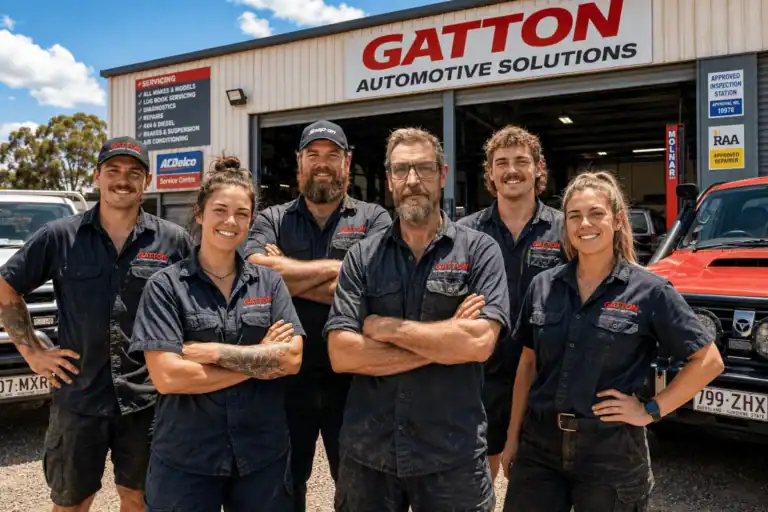
Gatton Automotive Solutions is a full-service workshop covering everything from everyday passenger cars to Triton and Pajero 4WDs, farm equipment, light trucks, and commercial vehicles. Our location in Gatton means drivers from across the Lockyer Valley don’t need to make the 45 to 80 kilometre round trip to Ipswich or Toowoomba for mechanical work, including cooling system repairs on Mitsubishi vehicles.
We handle smash repairs, custom paintwork, suspension work, tyre supply and fitting, roadworthy certificates, and parts sourcing in-house, alongside general mechanical repairs. That breadth matters when a radiator replacement uncovers a related issue, because we can deal with it in one place rather than sending you elsewhere. Our five-star reviews from local drivers reflect the way we work: straight advice, fair pricing, and no unnecessary upselling.
If your Mitsubishi is running warmer than usual or you’ve noticed any of the signs above, Call Us Now or Book Your Free Inspection online. We’re here to help Gatton and Lockyer Valley drivers keep their vehicles on the road.