Your Subaru’s brakes are doing more work than most drivers realise. Every hill descent, every sudden stop on the Warrego Highway, every school-zone slowdown asks something of those pads, rotors, and callipers. Subaru brake replacement is one of the more common jobs we handle at Gatton Automotive Solutions, and for good reason — Subarus are popular across the Lockyer Valley for their all-wheel drive capability and reliability, which means they do their share of loaded towing, farm track driving, and long highway runs. That kind of use puts real demands on a braking system, and staying on top of wear before it becomes a safety issue is exactly what this service is about.
Warning Signs Your Subaru Brakes Need Attention
Brake wear doesn’t always announce itself loudly. Sometimes it’s obvious, sometimes it’s subtle, and knowing what to look for can save you from a much bigger repair bill down the track.
- Squealing or squeaking when braking: Most brake pads include a small metal wear indicator that creates this sound deliberately. It’s telling you the pad material is running low and replacement is overdue.
- Grinding noise: This is the stage beyond squealing. When the pad is fully worn, metal contacts rotor directly. At this point, rotor damage is likely and the repair scope grows.
- Soft or spongy brake pedal: If the pedal feels different under foot, especially if it sinks lower than usual, that can point to air in the brake lines or a hydraulic issue.
- Pulling to one side under braking: Uneven wear between left and right callipers, or a sticking calliper, will cause the car to track sideways when you apply the brakes.
- Vibration through the steering wheel or pedal: This often means the rotors have developed runout (a slight warp) and are no longer perfectly flat. Common after repeated heavy braking without cool-down time.
- Longer stopping distances: If the car feels like it needs more road to come to a stop, don’t second-guess it. Get it inspected.
Subaru models that spend time on unsealed roads or carry heavy loads regularly tend to chew through rear brake shoes and pads faster than the factory schedule might suggest. If your Forester, Outback, or Impreza does a mix of highway and dirt driving out of Gatton, it’s worth checking brake condition at every service rather than waiting for a symptom.
How We Approach Subaru Brake Inspections and Replacement
We don’t just swap parts and send you on your way. When a Subaru comes in for brake work, we start with a full assessment of the braking system before quoting anything.
Inspection Before Replacement
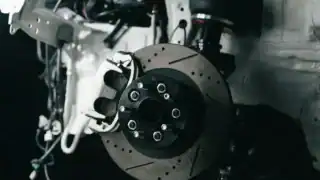
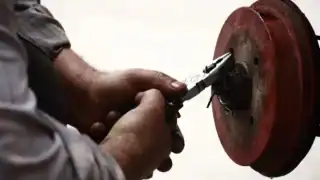
We measure pad thickness across all four corners and compare it against minimum safe wear specs. Rotor thickness is checked against Subaru’s specified minimum discard thickness, and we assess rotor surface condition for scoring, rust, or warp. Callipers are inspected for seizing or uneven movement. Where drum brakes are fitted (typically at the rear on older Subaru models), we check drum condition and shoe lining thickness before recommending brake shoe replacement.
Parts and Specifications
Subaru runs a brake-by-wire system on some newer models and a more conventional hydraulic setup on others. We match parts to the spec of your specific model, whether that means OEM-equivalent pads and rotors or a quality aftermarket alternative. For Subaru AWD models, using matched pairs across an axle matters for even brake bias, so we always replace in axle sets rather than single corners. Subaru brake pad change requests that come in for one corner almost always get the recommendation to do both sides of that axle at the same time.
After Replacement
Once new components are fitted, we bed in the brakes correctly. This is a controlled process of gradual heat cycling that sets the pad compound against the rotor surface. Skipping this step can lead to uneven deposits and reduced braking performance early in the pad’s life.
What Affects the Cost of Subaru Brake Replacement?
A few variables influence the scope and cost of brake work on any Subaru. The most significant is how far the wear has progressed. Replacing brake pads alone is a much simpler job than replacing pads alongside rotors, or dealing with a seized calliper. Subaru Outback and Forester models with larger disc assemblies will generally take longer to service than a smaller Impreza. Whether OEM-spec or quality aftermarket parts are used affects pricing, and we’ll walk you through the options. Parts sourcing is handled in-house, so there’s no waiting around for components to arrive from elsewhere.
Getting Your Subaru Brakes Replaced in Gatton
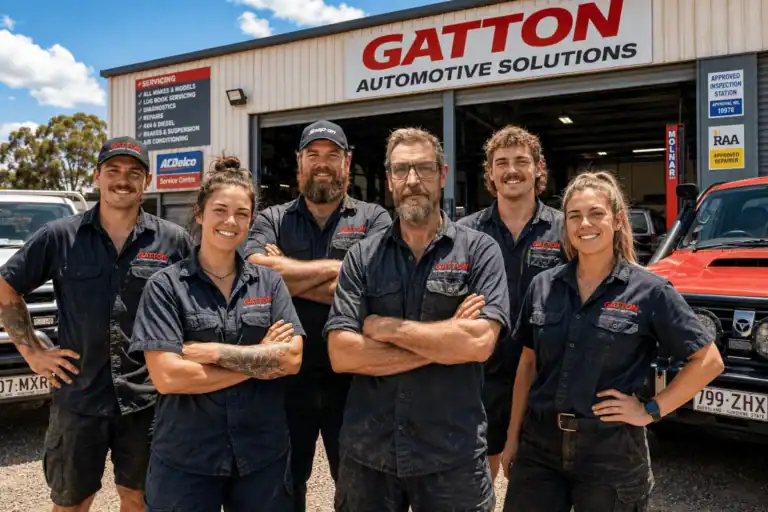
Gatton Automotive Solutions is a full-service workshop handling everything from passenger cars and 4WDs through to trucks and heavy equipment, all under one roof. Brake inspections and replacements are part of our day-to-day work, and we carry the equipment to do it properly. Our community across the Lockyer Valley has trusted us with vehicles of every age and type, and our five-star reviews reflect that. There’s no need to make the trip to Ipswich or Toowoomba for quality brake work. We offer fast while-you-wait servicing for straightforward jobs, and we’ll give you a clear picture of what’s needed before any work begins. No unnecessary add-ons, no vague estimates.
If your Subaru’s brakes are overdue for a look, Book Your Free Inspection online or Call Us Now. We’re here in Gatton and ready to help you get back on the road with confidence.