A failing radiator doesn’t give you much warning before things go seriously wrong. For Australian Vehicles owners around Gatton, radiator replacement is one of those jobs that needs to be done properly and promptly — a cracked tank, a blocked core, or a leaking end cap can push your engine into dangerous territory within minutes of heat build-up taking hold. Australian Vehicles Radiator Replacement is not a job to defer when the signs are already present. Australian Vehicles models are known for solid, practical engineering, but their cooling systems still wear with age, and a neglected radiator won’t quietly manage the heat your engine generates on a long run through the Lockyer Valley.
Signs Your Australian Vehicles Radiator Needs Attention
The cooling system gives you signals before it fails completely. Catching them early is the difference between a straightforward replacement and a repair bill that includes a warped cylinder head or blown head gasket.
- Temperature gauge climbing higher than normal, especially on the highway or while towing
- Coolant pooling under the vehicle after it’s been parked overnight
- Visible staining or dried coolant residue around the radiator fins, side tanks, or hose connections
- Coolant level dropping repeatedly even after you’ve topped it up
- A sweet smell coming from the engine bay – this is often ethylene glycol from a slow coolant leak
- Discoloured or milky coolant in the overflow reservoir, which can indicate internal contamination
- Radiator fins that are visibly corroded, bent, or blocked with debris
Some of these symptoms overlap with other cooling system faults – a leaking hose, a worn water pump, or a failing thermostat can produce similar results. That’s why a proper diagnosis matters before parts are ordered. We’ll pinpoint the source before recommending a replacement.
How We Approach Radiator Replacement on Australian Vehicles
When your Australian Vehicles comes in with a cooling concern, we start with a pressure test on the cooling system. This involves pressurising the system to its rated operating level and monitoring for pressure loss, which quickly reveals whether the radiator itself is the culprit or whether the problem sits elsewhere in the circuit.
For Australian Vehicles models, we pay close attention to the radiator’s construction. Most modern Australian-branded vehicles use a combination of aluminium cores with plastic side tanks, and those plastic tanks develop cracks and weep points as the material ages and cycles through heat and cold. Once we’ve confirmed the radiator is at fault, we drain the cooling system fully, disconnect the upper and lower hoses, remove the transmission cooler lines if your model uses the radiator as an integrated transmission fluid cooler (common on many Australian Vehicles automatics), and carefully remove the old unit.
The replacement radiator is fitted and all connections are re-sealed. We refill the system with a fresh coolant mix to the correct concentration for our Queensland climate, then bleed out any air pockets that would otherwise cause hot spots in the engine. A final warm-up cycle lets us confirm the thermostat is opening correctly, the temperature gauge settles at the right operating point, and there are no leaks at the new fittings.
Parts for Australian Vehicles Cooling Systems
We source quality replacement radiators that meet or exceed the original specifications for your model. For Australian Vehicles, that means matching the core dimensions, flow capacity, and mounting points exactly – an undersized unit won’t cool your engine adequately under load, and an ill-fitting mount creates vibration stress on the connections over time. Where OEM-equivalent parts are available for your specific model, we’ll discuss options with you honestly so you can make an informed call on quality versus cost.
What Affects the Cost and Time Involved
Radiator replacement costs vary depending on a few honest factors. The vehicle’s age and model affect parts availability – some older Australian Vehicles platforms have limited aftermarket support, which can influence sourcing time. The size of the radiator matters too; a small passenger sedan uses a much lighter unit than a large four-wheel drive or a commercial vehicle.
If your radiator feeds an integrated automatic transmission cooler, the fluid will need to be checked and possibly replaced as part of the job, which adds a small amount to both time and cost. Labour time is also affected by how accessible the radiator is in your engine bay – some configurations require removing additional components to get the unit out cleanly.
We won’t pad the job with work you don’t need. If only the radiator requires attention, that’s what we’ll quote. If we find related wear on hoses, the overflow tank, or the thermostat housing during the repair, we’ll let you know so you can decide whether to address it at the same time rather than discovering it later.
Why Gatton Drivers Choose Gatton Automotive Solutions for Cooling System Work
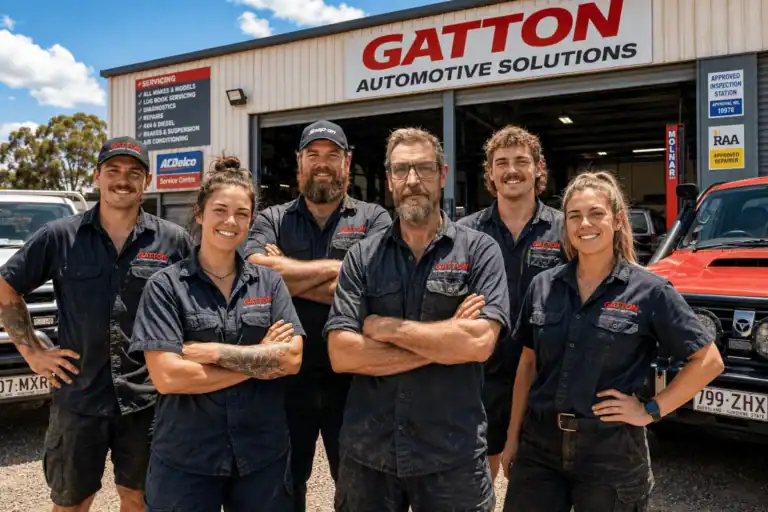
Getting this kind of repair done doesn’t have to mean a drive to Ipswich or Toowoomba. Gatton Automotive Solutions is a full-service workshop right here in Gatton, handling everything from everyday passenger vehicles through to 4WDs, trucks, and heavy equipment. Our five-star reviews reflect the kind of straight-talking, no-nonsense approach that regional drivers genuinely appreciate – you’ll hear what’s wrong, what needs doing, and what it’ll cost before we start.
Parts sourcing is handled directly through the workshop, which means you’re not left chasing suppliers or waiting on parts to arrive before the job can begin. For fleet operators running Australian Vehicles utes or work vehicles across the Lockyer Valley, minimising downtime matters, and we work to get commercial vehicles back on the road as efficiently as the job allows.
If your temperature gauge is creeping up or you’ve noticed a coolant smell under the bonnet, don’t leave it. Book Your Free Inspection online or Call Us Now and we’ll get your Australian Vehicles cooling system sorted right here in Gatton.