Limited Time: Free Windscreen Wipers With Any Service. Subject To Availability.

Locally Owned & Operated
Honest Upfront Pricing
5★ Reviews
All Makes & Models

Verified 5★ Reviews

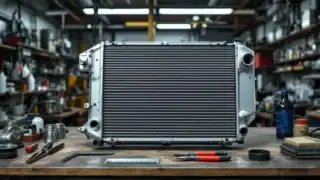
Expert Japanese Vehicles Radiator Replacement In Gatton

We replace faulty radiators in Japanese vehicles with factory-specification parts and test everything before you drive away. Call Us Now to book your free inspection.

One-Stop Workshop

Honest Advice

5★ Reviews

Japanese Cooling Experts

Book Your Free Inspection

Tell us what you need and we'll get back to you with a clear quote.

Booking Form
  • Vehicle Details
  • Confirm Vehicle
  • Services
  • Contact Details
Honest Quotes
All Vehicle Types
Local & Reliable

Why Book With Us

Book Your Free Inspection
Drop Off Your Vehicle
We Get to Work
Collect Your Car

A radiator that’s past its best can strand you on the side of the road faster than almost any other cooling system failure. For drivers of Japanese vehicles across Gatton and the Lockyer Valley, Japanese Vehicles radiator replacement is one of those jobs that’s worth doing properly the first time. Japanese makes like Toyota, Nissan, Mazda, Mitsubishi, Subaru, and Honda have strong reputations for reliability, but their cooling systems still wear out over time, and the radiator is often the first major component to go.

Signs Your Japanese Vehicle’s Radiator Needs Replacing

The radiator’s job is straightforward: circulate coolant through the engine to keep temperatures in check. When it starts to fail, the symptoms usually show up in one of a few ways.

  • Temperature gauge climbing higher than normal, especially in slow traffic or on a hot day
  • Coolant pooling under the car after it’s been parked, often with a sweet smell
  • Visible cracks, corrosion, or white residue on the radiator fins or end tanks
  • Coolant that looks brown or rusty instead of the correct colour for your vehicle’s spec (Toyota vehicles, for example, typically use a specific pink or red long-life coolant)
  • The heater blowing cold despite the engine being at operating temperature, which can point to low coolant circulation
  • Coolant mixing with engine oil, producing a milky-coloured residue on the dipstick or oil filler cap

That last symptom is a serious one. On some Japanese models, particularly older automatics where the transmission cooler runs through the radiator, an internal radiator failure can also contaminate your transmission fluid. It’s not common, but when it does happen on vehicles like older Nissan Patrols or some Mitsubishi Shoguns, the damage can extend well beyond the radiator itself if it’s left.

How We Approach Radiator Replacement on Japanese Vehicles

We start with a proper inspection rather than just quoting for a radiator off the shelf. That means a visual check of the radiator, hoses, clamps, and overflow bottle, plus a pressure test of the cooling system to confirm where the failure is occurring. On Japanese vehicles, it’s worth checking the thermostat and water pump at the same time, because replacing the radiator without addressing a sluggish thermostat means the new radiator is working against a restriction it shouldn’t have to deal with.

Parts sourcing is handled in-house. For Japanese vehicles, we can source OEM-equivalent or genuine-spec radiators that match the original coolant flow rates and fitment. Japanese manufacturers often use plastic end-tank radiators with aluminium cores as original equipment, and the replacement parts we use match those specifications. We don’t fit generic alternatives that don’t align with the original engineering if a correct-spec part is available.

Once the replacement is fitted, we refill the system with the correct coolant type for your vehicle and bleed out any air pockets. Air in a cooling system causes localised overheating that can damage a head gasket even when the temperature gauge looks fine, so this step matters. We run the engine up to operating temperature and verify the thermostat is opening correctly before the car leaves the workshop.

A Note on Toyota, Mazda, and Subaru Coolant Specs

Not all coolant is the same, and this is one area where Japanese vehicles have specific requirements that matter. Toyota’s genuine coolant is a red long-life formula; Subaru and Mazda use their own specifications, and mixing coolant types can cause corrosion inside the cooling system over time. We match the refill to the manufacturer’s recommendation rather than topping up with whatever’s available, because getting it wrong here shortens the life of the new radiator.

What Affects the Cost and Time for Radiator Replacement in Gatton?

The main variables are vehicle type, parts availability, and whether any related components need attention at the same time. A radiator for a common Hilux or Navara is generally easy to source quickly; a radiator for an older or less common model may take longer to procure. Larger 4WDs and dual-cab utes typically have more complex engine bay layouts than passenger cars, which affects labour time.

If the thermostat or hoses are deteriorated, it makes sense to replace them while the cooling system is already drained and the front of the engine is accessible. We’ll tell you what we find during the inspection and give you an honest assessment of what needs doing now versus what can wait. We don’t push unnecessary work.

Why Gatton Drivers Bring Their Japanese Vehicles to Us

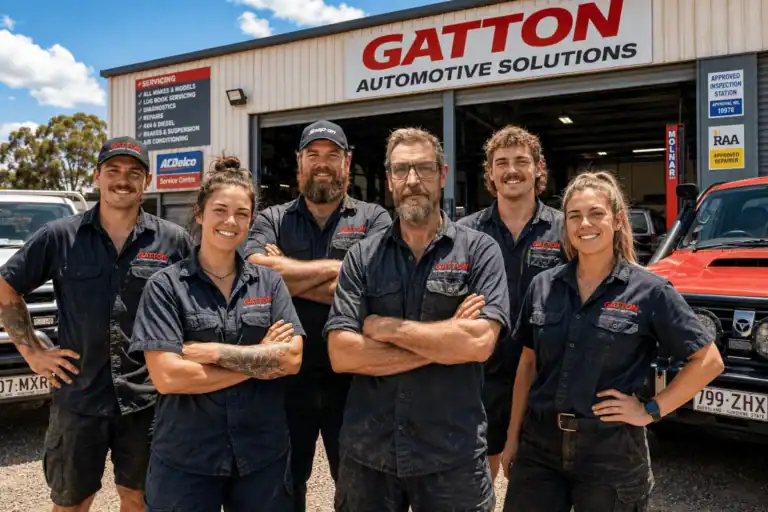
Gatton Automotive Solutions handles everything from everyday passenger cars to 4WDs, utes, trucks, and heavy equipment, all under one roof. There’s no need to drive 45 minutes to Ipswich or Toowoomba for cooling system work on your Japanese vehicle. We’re locally owned and operated, we source parts ourselves, and we back our work with honest advice rather than upselling.

With five-star reviews from Gatton and Lockyer Valley customers, the feedback speaks to how we treat people and their vehicles. Whether you’ve got a family Tarago, a work Hilux, or a Subaru Outback that’s done some hard country kilometres, we look after it the same way.

If your temperature gauge is misbehaving or you’ve noticed a coolant leak, don’t wait for it to become a breakdown. Book Your Free Inspection online or Call Us Now, and we’ll get your Japanese vehicle’s cooling system sorted right here in Gatton.

Other Services

Whatever your needs we have you covered, see some similar services below or click "See All Services" to explore our full service offering.

Your Local Workshop for Every Vehicle

Gatton Automotive Solutions is the one-stop shop for cars, 4WDs, trucks, and heavy equipment. Honest advice and fair pricing, right here in Gatton.

Honest Pricing, No Surprises

We tell you what’s needed and what it costs before we start. No upselling, no pressure.

Everything Under One Roof

Bring your car in and we’ll inspect it, explain what we find, and quote you upfront.

Japanese Radiator Specialist Knowledge

We source the right radiator parts for Japanese vehicles and get the job done properly.

How Japanese Radiator Replacement Works

From diagnosis to installation, here's how we handle radiator replacement on your Japanese vehicle.

Step 1

Book Your Free Inspection

Book your free inspection to assess your cooling system and confirm whether radiator replacement is needed.

Step 2

Cooling System Diagnosis

We pressure test your radiator, check coolant condition, and inspect hoses and connections for leaks or damage.

Step 3

Radiator Replacement

We fit a quality replacement matched to your Japanese vehicle's specifications and refill with fresh coolant.

Step 4

System Test & Collection

We run the engine and monitor temperatures to confirm the new radiator is working correctly before you drive away.

Five-Star Rated

Verified 5★ Reviews

Quality Parts From Trusted Suppliers

We use genuine and quality aftermarket parts from reputable suppliers. You get reliable components backed by proper warranties.

Book Your Free Inspection

Tell us what you need and we'll get back to you with a clear quote.

Booking Form
  • Vehicle Details
  • Confirm Vehicle
  • Services
  • Contact Details
Honest Quotes
All Vehicle Types
Local & Reliable

Why Book With Us

Book Your Free Inspection
Drop Off Your Vehicle
We Get to Work
Collect Your Car

Frequently Asked Questions

Browse answers to common questions about our services. Can't find what you're after? Give us a call and we'll help.

A repair may be suitable for minor leaks at hoses or clamps, but if the radiator core itself is cracked, corroded, or internally blocked, replacement is usually the better call. Japanese vehicles like Toyota, Mazda, Honda, and Nissan often use plastic end-tank radiators that become brittle over time, making repairs to the tank itself unreliable. If your engine is overheating repeatedly despite topping up coolant, or if you can see visible damage to the radiator body, replacement gives you a lasting fix rather than a short-term patch.

The most common causes are age-related corrosion, electrolytic damage from old coolant, physical damage from road debris, and coolant that has not been flushed on schedule. Many Japanese vehicles use aluminium cores with plastic end tanks, and the seal between these two materials degrades over years of heat cycling. Neglecting coolant changes accelerates this process, as old coolant becomes acidic and eats away at internal surfaces. A blockage from scale build-up can also restrict flow enough to cause overheating even without a visible leak.

No. Continuing to drive an overheating vehicle risks serious engine damage, including warped cylinder heads or a blown head gasket, both of which are far more expensive to fix than a radiator. If your gauge climbs into the red, pull over safely, turn the engine off, and let it cool before calling for assistance. Do not remove the radiator cap while the engine is hot. Get the cooling system inspected before driving the vehicle again.

Most radiator replacements on Japanese passenger cars and SUVs are completed within a few hours, often on the same day the vehicle is dropped off. The exact time depends on the model, how accessible the radiator is in that engine bay, and whether the coolant flush and refill are included in the same visit. More complex vehicles or those with additional cooling system components that need attention may take longer. We will give you a clear idea of the timeframe when you book.

We start by draining the existing coolant and inspecting the surrounding cooling system components, including hoses, the thermostat, the radiator cap, and the overflow reservoir. The old radiator is removed and the new unit fitted, with fresh coolant mixed to the correct concentration for your vehicle. We then run the engine to check for leaks, monitor operating temperature, and bleed any air from the system. Before the car leaves, we confirm the temperature gauge is reading normally and there are no signs of residual leakage.

Under Australian Consumer Law, as outlined in ACCC guidance, vehicle manufacturers generally cannot void your warranty simply because you had servicing or repairs carried out by an independent workshop rather than a dealership. This applies to radiator replacement as it does to other maintenance work. That said, warranty terms vary, and this is general information rather than legal advice. We recommend checking your specific warranty documentation if you have any concerns about your situation.

We source quality OEM-equivalent radiators suited to your specific make and model. For Japanese vehicles, this typically means radiators that meet the original design specifications for fit, capacity, and materials. In some cases, genuine manufacturer parts are available and may be preferred, particularly for newer vehicles still under warranty. We will talk you through the options so you can make the right call for your car and budget. Parts sourcing is handled by us, so you do not need to track anything down yourself.

Most Japanese vehicle manufacturers recommend a coolant flush every two to three years or at a set kilometre interval, though the exact schedule depends on your model and the type of coolant used. Some newer models use long-life coolant formulations that extend service intervals. Letting coolant go too long breaks down its corrosion inhibitors, which is one of the primary causes of radiator and water pump failure in Japanese cars. Your logbook will have the specific recommendation for your vehicle.

Yes. Some Toyota and Lexus V6 and V8 models from certain production years are known for plastic coolant fittings that crack with age. Older Nissan models with iron block engines can develop scale build-up that restricts radiator flow over time. Mazda rotary engines are particularly sensitive to cooling system health given their operating temperatures. Honda and Subaru models with aluminium engines benefit from coolant that is replaced on schedule to prevent electrolytic corrosion. Knowing your specific model helps us inspect the right areas and source the correct parts.

The most obvious sign is a rising temperature gauge or an overheating warning light. You might also notice coolant pooling under the car after it has been parked, a sweet smell from the engine bay, or a white residue around hose connections or the radiator itself. A heater that stops blowing warm air can indicate low coolant levels caused by a leak. Drivers in and around Gatton covering longer daily distances should check coolant levels periodically, especially heading into summer when the heat adds extra load to the cooling system.

Continue to site