Limited Time: Free Windscreen Wipers With Any Service. Subject To Availability.

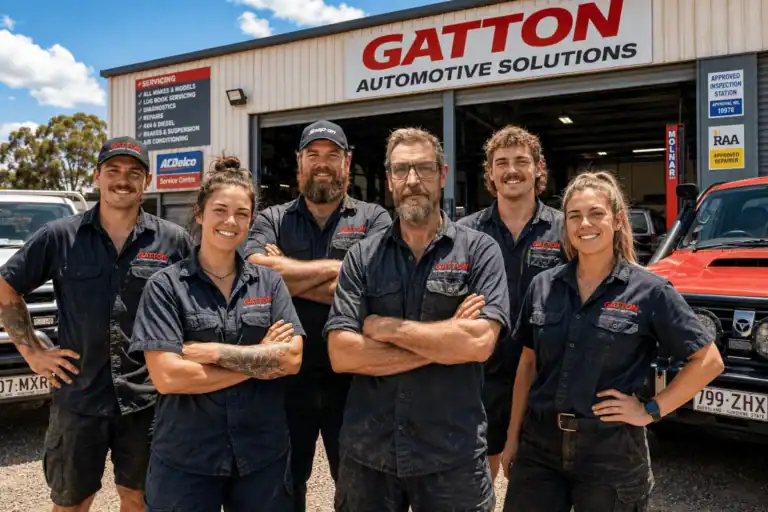
Locally Owned & Operated
Honest Upfront Pricing
5★ Reviews
All Makes & Models

Verified 5★ Reviews

Reliable Suzuki Brake Specialist In Gatton

We inspect and repair Suzuki brakes with the same care we'd use on our own vehicles. Expert diagnostics, genuine parts, and fair pricing for Gatton drivers.

One-Stop Workshop

Honest Advice

5★ Reviews

Suzuki Brake Specialists

Book Your Free Inspection

Tell us what you need and we'll get back to you with a clear quote.

Booking Form
  • Vehicle Details
  • Confirm Vehicle
  • Services
  • Contact Details
Honest Quotes
All Vehicle Types
Local & Reliable

Why Book With Us

Book Your Free Inspection
Drop Off Your Vehicle
We Get to Work
Collect Your Car

Suzuki brake repair is one of those jobs where getting it right the first time genuinely matters. Suzukis are popular across the Lockyer Valley for good reason — they’re practical, fuel-efficient, and reliable day-to-day. But like any vehicle, their braking systems need regular attention to stay safe and responsive. At Gatton Automotive Solutions, we work on Suzukis regularly, from Swift hatchbacks driven around town to Jimny 4WDs tackling rougher country roads. If your brakes feel off, don’t sit on it.

Warning Signs Your Suzuki Brakes Need Attention

Brake problems rarely arrive without warning. The trick is knowing what to look for before a small issue becomes a costly one.

  • Squealing or grinding when braking: A high-pitched squeal usually means worn brake pads pressing on the rotor. Grinding is worse — it often means the pad material is gone and metal is contacting metal directly.
  • Longer stopping distances: If your Suzuki is taking noticeably more road to come to a stop, the system needs inspection. This can point to worn pads, contaminated brake fluid, or problems with the brake caliper.
  • Pulling to one side under braking: Uneven pad wear, a sticking caliper, or a partially blocked brake line can all cause your car to veer left or right when you press the pedal.
  • Pulsing or vibrating through the pedal: This is often caused by warped brake rotors — a common result of heavy braking over extended periods, or heat cycling on steep terrain.
  • Soft or spongy brake pedal: If the pedal sinks further than usual or feels mushy, air in the brake lines or low brake fluid may be the cause. This should be checked promptly.
  • Brake warning light on your dash: Suzuki’s instrument cluster will flag low brake fluid or a detected fault in the ABS (Anti-lock Braking System). Don’t dismiss it.

Some of these symptoms overlap with other mechanical issues, which is why a proper inspection by someone familiar with Suzuki vehicles is worth doing properly rather than guessing.

How We Inspect and Repair Suzuki Brakes

We start with a thorough visual and physical inspection of all four corners. That means checking pad thickness, rotor condition, caliper operation, brake lines, hoses, and brake fluid level and condition. On Suzuki models with ABS, we also check that the wheel speed sensors and ABS module are functioning correctly — faults here won’t always trigger a warning light straight away.

Suzuki uses a hydraulic brake system across its range, and the specific setup varies between models. A Swift or Baleno will have different front rotor dimensions and caliper specs compared to a Vitara or Grand Vitara. We work from the correct specifications for your model so parts are matched properly, not just close enough.

Parts and Fluids for Suzuki Vehicles

We source brake components that meet Suzuki’s original equipment specifications. That includes brake pads formulated to match the friction requirements of your specific model, rotors machined to the correct thickness and diameter, and brake fluid that meets Suzuki’s DOT specification requirements. Using undersized or mismatched components on a Suzuki can result in inconsistent pedal feel, premature wear, and reduced braking performance — so this part of the process is not one we skip over.

If your brake fluid has not been replaced in a while, we may also recommend a fluid flush. Brake fluid absorbs moisture over time, which lowers its boiling point and can lead to a spongy pedal feel under harder braking. Suzuki’s service guidelines recommend periodic fluid changes, and this is often overlooked at general service intervals.

What Affects the Cost and Time for Brake Work on a Suzuki?

A few factors influence how long the job takes and what it costs. The main ones are the severity of the wear, which components need replacing, and your Suzuki’s model and age. A straightforward front pad and rotor replacement on a Swift is a different scope to a full four-wheel brake service on a Grand Vitara with significant corrosion around the caliper hardware.

Whether OEM-specification parts or quality aftermarket equivalents are the right fit for your situation is something we discuss with you before starting. Parts sourcing is handled in-house, so we’re not sending you elsewhere to chase components. For most common Suzuki models, parts are readily available and turnaround is typically efficient — though older or less common variants may take a little longer to source.

Suzuki Brake Repair in Gatton, Without the Drive to the City

Plenty of Lockyer Valley drivers have been told to head to Ipswich or Toowoomba for brake work on their Suzuki. That’s an 80-kilometre round trip for a job that can be done locally. Gatton Automotive Solutions handles brake repairs alongside a full range of mechanical, tyre, and roadworthy services — all under one roof. Whether you drive a small Suzuki Swift as a daily commuter or a Jimny you use for weekends off-road, we service it here in Gatton.

We’re locally owned and operated, and we’ve built our reputation on straightforward advice and fair pricing. No upselling, no unnecessary work recommended. If something doesn’t need replacing, we’ll tell you that too. With our five-star reviews from customers across the Gatton region, we’re a workshop people come back to.

Ready to Book a Brake Inspection?

If your Suzuki is showing any of the symptoms above, or your brakes are simply due for a check, Call Us Now or Book Your Free Inspection online. We’re right here in Gatton and ready to help.
Other Services

Whatever your needs we have you covered, see some similar services below or click "See All Services" to explore our full service offering.

Your Local Workshop for Every Vehicle

Gatton Automotive Solutions is the one-stop shop for cars, 4WDs, trucks, and heavy equipment. Honest advice and fair pricing, right here in Gatton.

Honest Pricing, No Surprises

We tell you what’s needed and what it costs before we start. No upselling, no pressure.

Everything Under One Roof

Bring your car in and we’ll inspect it, explain what we find, and quote you upfront.

Suzuki Brake System Knowledge

We know Suzuki brake systems inside out and source OEM-spec parts locally.

How Suzuki Brake Repair Works

From booking your free inspection through to safe, reliable brakes back on the road.

Step 1

Book Your Free Inspection

Call Us Now or book online to arrange your Suzuki brake inspection and get expert advice.

Step 2

Suzuki Brake System Inspection

We measure pad thickness, rotor wear, and fluid condition using Suzuki-compatible diagnostics and tools.

Step 3

Precision Brake Repair

We replace pads, rotors, and fluid to Suzuki specifications, then bleed and test the complete system.

Step 4

Safety Test And Handover

We road test your brakes, confirm safe stopping performance, and hand back your Suzuki ready to drive.

Five-Star Rated

Verified 5★ Reviews

Quality Parts From Trusted Suppliers

We use genuine and quality aftermarket parts from reputable suppliers. You get reliable components backed by proper warranties.

Book Your Free Inspection

Tell us what you need and we'll get back to you with a clear quote.

Booking Form
  • Vehicle Details
  • Confirm Vehicle
  • Services
  • Contact Details
Honest Quotes
All Vehicle Types
Local & Reliable

Why Book With Us

Book Your Free Inspection
Drop Off Your Vehicle
We Get to Work
Collect Your Car

Frequently Asked Questions

Browse answers to common questions about our services. Can't find what you're after? Give us a call and we'll help.

A Suzuki brake repair typically covers inspection of the pads, rotors, callipers, brake lines, and fluid condition, followed by replacement of whatever has worn or failed. Simple pad and rotor replacements on most Suzuki models are usually completed within a couple of hours. More involved work, such as calliper rebuilds or brake line repairs, takes longer. We’ll give you a clear rundown of what’s needed before any work starts, so there are no surprises.

No, a grinding noise usually means the brake pads have worn through completely and metal is contacting the rotor. At that point, stopping distances increase significantly and rotor damage accelerates. What might have been a straightforward pad replacement can turn into a more involved job the longer it’s left. If your Suzuki is grinding, squealing sharply, pulling to one side, or the brake pedal feels soft or low, get it inspected as soon as you can.

Suzuki Swifts in higher-mileage city driving tend to chew through front brake pads faster than the rear, partly due to their light kerb weight and the braking balance that comes with it. Jimnys used for off-road work often show accelerated rear brake wear and can develop sticking callipers from mud and water ingress. Knowing the specific model and how it’s used helps us identify what to focus on during inspection, rather than treating every Suzuki the same.

Under ACCC guidance, Australian consumer law generally does not require you to have your vehicle serviced exclusively at a dealership to maintain your manufacturer warranty. An independent workshop can carry out brake repairs using quality parts and document the work properly. This is general information rather than legal advice, so if you have concerns specific to your Suzuki’s warranty terms, it’s worth checking your documentation or contacting Suzuki Australia directly. We can stamp and record brake work in your logbook where applicable.

The main variables are which components need replacing, the specific Suzuki model, and how far the wear has progressed. Replacing pads alone is straightforward and less involved than machining or replacing rotors, rebuilding callipers, or renewing brake fluid. Parts costs also differ between models, with some Suzuki variants using more common components than others. Catching brake wear early nearly always means a less expensive repair. We’re based in Gatton, so you’re not paying for the travel or markup that comes with taking your vehicle further afield.

A brake inspection at every service interval is a sensible habit, typically every 10,000 to 15,000 kilometres for most Suzuki models on regular logbook schedules. That said, driving style and conditions matter just as much as distance. Stop-start commuting around Gatton and the Lockyer Valley wears pads faster than highway driving. Towing, off-road use in a Jimny, or carrying heavy loads shortens service life further. If you notice any change in braking feel or hear unfamiliar noises, don’t wait for the next scheduled service.

Continue to site