Limited Time: Free Windscreen Wipers With Any Service. Subject To Availability.

Locally Owned & Operated
Honest Upfront Pricing
5★ Reviews
All Makes & Models

Verified 5★ Reviews

Highly Rated Hyundai Brake Replacement In Gatton

Gatton Automotive Solutions replaces Hyundai brakes using factory-spec parts and inspects your full braking system for safety. No upselling, straight pricing. Book Your Free Inspection and get back on the road with confidence.

One-Stop Workshop

Honest Advice

5★ Reviews

Hyundai Brake Experts

Book Your Free Inspection

Tell us what you need and we'll get back to you with a clear quote.

Booking Form
  • Vehicle Details
  • Confirm Vehicle
  • Services
  • Contact Details
Honest Quotes
All Vehicle Types
Local & Reliable

Why Book With Us

Book Your Free Inspection
Drop Off Your Vehicle
We Get to Work
Collect Your Car

Brakes are the one system on your Hyundai you simply cannot afford to overlook. Whether you drive an i30, a Tucson, a Kona, or a Sonata, the brake components on your vehicle are working hard every single day, and they wear down gradually over time. A Hyundai brake replacement isn’t just about fixing a squeal or a shudder, it’s about keeping you, your passengers, and everyone else on the road safe. Our team at Gatton Automotive Solutions handles Hyundai brake pad replacement, brake rotor resurfacing and replacement, rear drum and shoe servicing, and full brake system inspections, so everything gets looked at properly.

Warning Signs Your Hyundai Brakes Need Attention

Hyundais are generally well-built cars, but the brake wear indicators across the range are worth knowing. The pads on many Hyundai models, particularly the i30 and Tucson, include a metal wear indicator that produces a high-pitched squealing when the pad material is running low. That sound is deliberate; it’s your car telling you something needs to change.

Beyond squealing, there are several other signs that suggest brake work is needed sooner rather than later:

  • Grinding or scraping when you apply the brakes, which usually means the pad has worn through completely and metal is contacting the rotor
  • A soft or spongy brake pedal that sinks lower than usual before the car slows, which can point to air in the brake lines or a master cylinder issue
  • Pulling to one side under braking, often caused by uneven pad wear or a sticking caliper
  • Vibration or pulsing through the pedal or steering wheel, typically linked to warped rotors
  • The ABS or brake warning light illuminating on the dashboard, which can indicate low brake fluid, a sensor fault, or a more significant system issue

If your Hyundai is doing any of the above, don’t wait for your next service interval. Brake systems can deteriorate quickly once wear passes a certain point, and driving on compromised brakes increases stopping distances in ways that aren’t always obvious until you need to stop in a hurry.

How We Approach Hyundai Brake Servicing

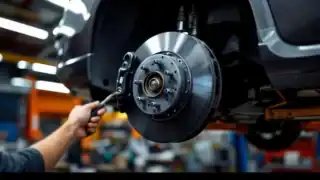
When your Hyundai comes in for a brake inspection or replacement, we don’t just swap parts and send you on your way. We start with a proper assessment of the full system. On most Hyundai models, the front brakes carry the majority of the braking load, so pad thickness and rotor condition at the front are checked first. The rear brakes, which may be either disc or drum depending on your model and year, are inspected separately.

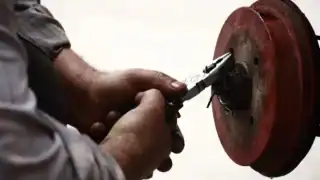
For Hyundai models fitted with rear drum brakes, such as some base-spec Accents and older i20s, we check the brake shoe lining thickness, the drum diameter, and the condition of the wheel cylinders. Rear drum brake shoe replacement is a different job to rear disc pad replacement, and the process varies between models. We make sure we’re working to the correct specifications for your specific vehicle.

We also check brake fluid condition as part of this process. Hyundai’s service schedule typically recommends brake fluid replacement every two years regardless of distance, because brake fluid absorbs moisture over time and that can lower its boiling point, which matters when brakes are working hard.

Parts quality matters too. We use OEM-specification or genuine-equivalent parts suited to your Hyundai’s braking system. Fitting undersized or mismatched pads to a Hyundai can affect pedal feel and braking consistency, so we don’t cut corners on components.

Brake Rotors: Resurface or Replace?

One of the more common questions we get is whether rotors need replacing or just resurfacing. The answer depends on rotor thickness. Every Hyundai rotor has a minimum discard thickness, and if a rotor has worn, warped, or been machined below that spec, it needs replacing outright. We measure before we recommend, so you’re not paying for parts you don’t need.

What Affects the Cost of Hyundai Brake Replacement in Gatton?

Brake work varies in cost based on a few straightforward factors. The biggest variable is which axle needs work. Front brake pad replacement on its own is a different scope to a full four-wheel brake job including rotors. The model matters too. Parts for a Hyundai Tucson or Santa Fe are priced differently to those for a base-spec i20, simply because the components are larger and the caliper hardware differs.

Whether you need pads only, or pads and rotors together, also affects the job. Some customers come in having already noticed vibration under braking, which often means the rotors have warped and need replacing at the same time as the pads. We’ll always explain what we’ve found before any work begins.

Why Lockyer Valley Hyundai Drivers Choose Gatton Automotive Solutions

Gatton Automotive Solutions is a full-service workshop with the scope to handle everything from a quick Hyundai brake pad change to complex brake system faults across cars, 4WDs, and commercial vehicles. There’s no need to drive to Ipswich or Toowoomba for quality brake work on your Hyundai; we’ve got the parts, the equipment, and the experience right here in Gatton. Our five-star reviews reflect what we’ve built in this community: honest advice, fair pricing, and no unnecessary work pushed onto the job.

We also issue roadworthy certificates on-site, which matters if your brake work forms part of a pre-sale inspection or a registration renewal check. And because we handle everything from general mechanical work and tyre fitting through to suspension upgrades and smash repairs, you won’t need to juggle multiple workshops for related jobs.

If your Hyundai is showing any of the signs above, or you’d just like peace of mind before a long drive, Call Us Now or Book Your Free Inspection online and we’ll take a proper look at your brakes here in Gatton.
Other Services

Whatever your needs we have you covered, see some similar services below or click "See All Services" to explore our full service offering.

Your Local Workshop for Every Vehicle

Gatton Automotive Solutions is the one-stop shop for cars, 4WDs, trucks, and heavy equipment. Honest advice and fair pricing, right here in Gatton.

Honest Pricing, No Surprises

We tell you what’s needed and what it costs before we start. No upselling, no pressure.

Everything Under One Roof

Bring your car in and we’ll inspect it, explain what we find, and quote you upfront.

Hyundai Brake System Specialists

We know Hyundai brake systems inside out and source OEM-spec parts locally.

How Hyundai Brake Replacement Works

From inspection through to collection, here's how we handle your Hyundai brake replacement safely and efficiently.

Step 1

Book Your Free Inspection

Call Us Now or book your free inspection online to have your Hyundai brakes assessed by our technicians.

Step 2

Hyundai Brake System Inspection

We measure pad thickness, inspect rotors for damage, test brake fluid condition, and check Hyundai-specific components.

Step 3

Precision Brake Replacement

We fit quality brake pads and rotors, adjust clearances to Hyundai specs, and bleed the brake system thoroughly.

Step 4

Safety Test & Collection

We road test your Hyundai, verify brake feel and stopping power, then hand over your vehicle ready to drive safely.

Five-Star Rated

Verified 5★ Reviews

Quality Parts From Trusted Suppliers

We use genuine and quality aftermarket parts from reputable suppliers. You get reliable components backed by proper warranties.

Book Your Free Inspection

Tell us what you need and we'll get back to you with a clear quote.

Booking Form
  • Vehicle Details
  • Confirm Vehicle
  • Services
  • Contact Details
Honest Quotes
All Vehicle Types
Local & Reliable

Why Book With Us

Book Your Free Inspection
Drop Off Your Vehicle
We Get to Work
Collect Your Car

Frequently Asked Questions

Browse answers to common questions about our services. Can't find what you're after? Give us a call and we'll help.

Most Hyundai brake replacements are completed within one to two hours for a standard front or rear axle set. If you need all four corners done, or if we find worn rotors that also need replacing, allow a little more time. We’ll give you a clear idea of the timeframe when you book, so you’re not left waiting around without knowing what’s happening. Many customers drop the car in and we have it back to them the same day.

It depends on the noise, but squealing, grinding, or a pulsing feeling through the brake pedal are all signs that something needs attention soon. Grinding in particular usually means the pads are worn through to the metal backing, which can damage your rotors quickly and significantly increase repair costs. Brakes are the most safety-critical system on your car. If you’re noticing any of these symptoms, get the car inspected before the problem gets worse.

Under ACCC guidance, Australian consumer law generally allows you to have your vehicle serviced by a qualified independent mechanic without voiding your manufacturer warranty, provided the work meets manufacturer specifications and is properly documented. This is general information, not legal advice, so it’s worth checking your specific warranty terms if you’re unsure. We keep records of parts used and work carried out, which supports your service history regardless of where you have the work done.

We start by removing the wheels to access the brake assembly. We inspect the pads, rotors, callipers, and brake lines before fitting new pads. On Hyundai models, we check the electronic parking brake actuator where fitted, since these require a scan tool to retract the callipers correctly before new pads can be installed. The brakes are bedded in after fitment and we road test the vehicle before handing it back. You’ll know exactly what was replaced and why.

A few Hyundai models, particularly those with electronic parking brakes, need a compatible scan tool to service the rear brakes properly. Attempting rear pad replacement without retracting the motor-driven calliper can damage the actuator, which is an expensive fix. Some Hyundai i30 and Tucson owners also report faster-than-expected rear pad wear, likely due to brake bias settings. We’re familiar with these model-specific details and use parts that meet Hyundai’s specifications for fit and performance.

There’s no single answer because it depends heavily on how and where you drive. City driving with frequent stopping wears pads faster than highway kilometres. As a general guide, front pads often need attention somewhere between 40,000 and 70,000 kilometres, but rear pads can last longer. Drivers around Gatton who regularly tow trailers or carry heavy loads will wear through pads more quickly. The best approach is to have them checked at each service so you’re not caught off guard.

Several factors influence the final price. The main variables are whether you need pads only or pads and rotors together, which axle is being done, and which Hyundai model you drive since parts pricing varies across the range. Labour time can also increase if the vehicle has an electronic parking brake that requires a scan tool to service correctly. Getting a quote upfront based on your specific model and what’s actually needed gives you a much clearer picture than a generic price.

Rotors often need replacing when they’ve worn below the minimum thickness specified by Hyundai, or when they’ve developed deep scoring, heat cracks, or significant warping. A pulsing sensation when you apply the brakes is a common sign of rotor runout or warping. We measure rotor thickness during every brake inspection and compare it against the manufacturer’s minimum. Fitting new pads to badly worn or damaged rotors shortens pad life and reduces braking performance, so we always check both together.

We use parts that meet or exceed Hyundai’s original specifications. This typically means quality OEM-equivalent brake components from reputable suppliers, which perform to the same standard as dealer-supplied parts at a more competitive price. If you specifically want genuine Hyundai-branded parts, we can discuss that option when you book. Either way, we document what was fitted so your service records accurately reflect the work carried out at our workshop in Gatton.

Brake shoes are used in drum brake systems, which are most commonly found on the rear axle of smaller Hyundai models. Signs they need attention include a scratching or grinding noise when braking, the handbrake needing to be pulled higher than usual before it holds, or the car pulling slightly to one side when slowing down. Drum brakes are often overlooked because they’re less visible than disc setups, but worn shoes affect stopping distances just as much as worn pads on disc brakes.

Continue to site