Volkswagen brake replacement is one of those jobs where getting it right matters more than getting it done fast. VW brakes are engineered to tight specifications, and the wrong parts or a rushed inspection can leave you with noisy, uneven, or poorly performing brakes that wear out again quickly. At Gatton Automotive Solutions, we service Volkswagen vehicles regularly and understand the differences in how these cars are designed, from the way the electronic parking brake integrates with rear caliper service to the specific pad compounds that suit each model’s rotor material.
Warning Signs Your Volkswagen Brakes Need Attention
Volkswagen drivers often notice brake wear in a few characteristic ways. The factory brake pads on many VW models include a wear indicator that creates a high-pitched squealing sound when the pads get low. That sound is designed to get your attention, not annoy you. Don’t ignore it.
Beyond squealing, there are other signs worth taking seriously:
- Grinding or scraping noise when braking, which often means the pad material is gone and metal is contacting the rotor
- Vibration or pulsing through the brake pedal, typically caused by warped or unevenly worn rotors (also called brake discs)
- The car pulling to one side when you apply the brakes, which can indicate a seized caliper or uneven pad wear front-to-back
- A soft or spongy pedal feel, which may point to brake fluid issues or air in the hydraulic system
- Longer stopping distances than you’re used to, especially noticeable in wet conditions
If you’re driving a Golf, Tiguan, Polo, Amarok, or any other VW model and noticing these symptoms around Gatton or further out through the Lockyer Valley, it’s worth having the brakes inspected before the problem gets more expensive to fix.
What’s Involved in a Volkswagen Brake Service
Inspection and Diagnosis First
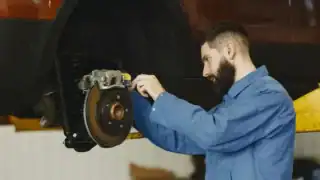
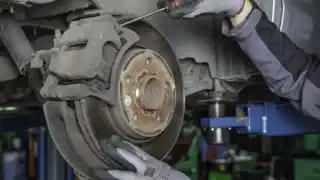
We don’t replace parts for the sake of it. Before quoting anything, we inspect what’s actually there. On Volkswagen vehicles, this includes measuring pad thickness, checking rotor surface condition and minimum thickness, assessing caliper movement and piston retraction, and examining brake hoses for cracking or swelling. On models with rear electric parking brakes, common across later-model Golfs, Passats, and Tiguans, the caliper pistons need to be wound back using a specific process rather than simply compressed. A standard piston tool won’t work on these. We use the correct procedure to avoid damaging the caliper.
Parts and Specifications
Volkswagen sets specific performance standards for brake pad compound, rotor thickness, and disc diameter by model and variant. We source parts that meet those specifications, whether that’s OEM-equivalent quality pads and rotors or genuine parts where that’s the right call for the vehicle. Using undersized or low-grade parts on a VW, particularly performance variants like the GTI or R-Line models, creates uneven wear and can affect braking performance sooner than expected.
Where rear brake shoes are involved on older VW drum brake setups, we inspect the full drum assembly, adjust the shoe-to-drum clearance, and check wheel cylinders for leaking. Drum brakes are less common on modern VW models but still found on some Polo and older Caddy configurations.
After the Work Is Done
Brake pad and rotor replacement requires a bedding-in process for the pads to seat properly against the new rotor surface. We’ll let you know what to expect in the first 100 to 200 kilometres after the service, including avoiding hard stops where possible while the pads establish proper contact.
What Affects the Cost and Time for VW Brake Work
A straightforward front brake pad replacement on a standard VW hatchback takes less time than a full four-wheel brake service on an Amarok or a rear-caliper job requiring electronic parking brake retraction. The main variables that affect how long the job takes and what it costs include the number of axles being serviced, whether rotors need replacement alongside pads, parts sourcing time for less common VW variants, and the condition of hardware like caliper slide pins and brake hose fittings, which can corrode and add time to the job.
We’ll give you a clear breakdown before we start, so there are no surprises. No unnecessary work, no upselling. If only the front pads need replacing, that’s what we’ll quote.
Why Choose Gatton Automotive Solutions for Volkswagen Brake Work
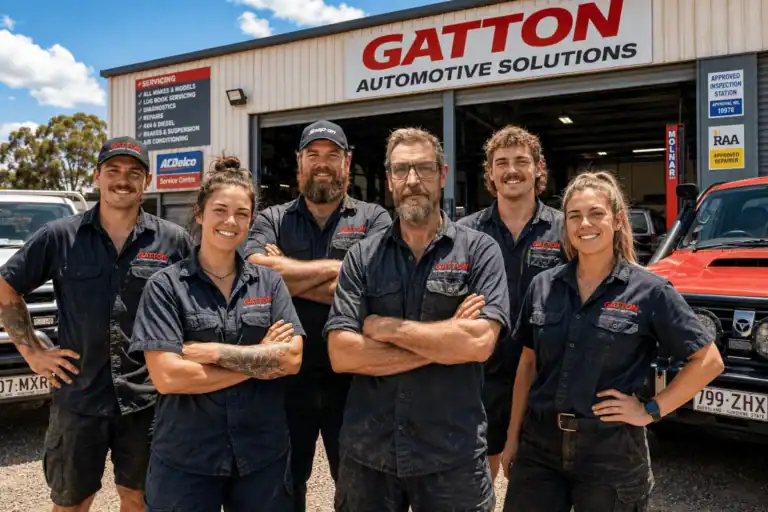
We’re a locally owned workshop in Gatton, and we handle everything from everyday Polos driven by families in town to Amaroks working on properties across the Lockyer Valley. Driving to Ipswich or Toowoomba for brake work isn’t something most people want to do, and with the capability we have on-site, there’s genuinely no need to.
Our five-star reviews reflect a simple approach: tell people what the vehicle needs, do the work properly, and charge fairly for it. We’re a full-service workshop, meaning brake work can be combined with tyre fitting, a roadworthy certificate, or a general mechanical inspection in a single visit. If your VW needs attention beyond the brakes, we can handle it here without booking across multiple workshops.
If you’re not sure whether your brakes need replacing or just inspecting, come in for a look. Book Your Free Inspection online or Call Us Now, and we’ll take it from there.