Your Honda’s brakes are doing serious work every day, and getting a Honda brake replacement done properly means more than just swapping parts. It means understanding how your specific model’s braking system behaves, using parts that meet Honda’s specifications, and catching secondary wear before it becomes a bigger problem. At Gatton Automotive Solutions, we see Hondas regularly, from Civic hatchbacks and CR-V SUVs to Jazz runabouts and HR-V crossovers, and we know what to look for when the braking performance starts to fall short.
Warning Signs Your Honda Needs Brake Work
Honda brake systems are generally reliable, but they do have known wear patterns worth knowing about. The rear brake pads on many Honda models, particularly the CR-V and Accord, can wear faster than the fronts depending on how the electronic parking brake and brake bias are calibrated. If you’re noticing any of the following, it’s worth getting them looked at before they develop further.
- Squealing or squeaking when slowing down, especially in the morning or after rain. This is often the wear indicator built into the brake pad making contact with the rotor.
- Grinding or metal-on-metal noise during braking. This usually means the pad material is fully worn and the steel backing plate is contacting the rotor directly.
- A soft or spongy brake pedal that sinks further than usual before the brakes bite. This can point to air in the brake lines or worn hydraulic components.
- Vibration or pulsing through the steering wheel or pedal when braking. This is often a sign of warped rotors, which is more common in Hondas that do a lot of stop-start driving or frequent towing.
- Pulling to one side under braking, which can indicate uneven pad wear or a sticking caliper.
- Longer stopping distances, which may feel subtle but can be significant in an emergency.
Honda models with electronic parking brake systems, including later-model CR-Vs and the Accord, require specific procedures to retract the rear caliper pistons. This is not a job for a standard piston wind-back tool. Attempting it without the right approach can damage the caliper motor and leave you with a repair bill far beyond the original brake job.
What Honda Brake Replacement Involves at Our Workshop
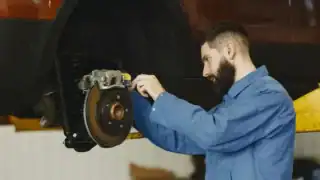
We start with a full inspection before any parts are ordered. That means measuring brake pad thickness, checking rotor surface depth against minimum specifications, inspecting caliper operation and slide pins, and looking at brake hose condition. For Honda vehicles, we also check the brake fluid moisture content, since Honda recommends replacement on a defined interval and moisture-saturated fluid reduces braking performance and can cause internal corrosion in the ABS modulator.
For Honda brake pad replacement, we use parts that meet or exceed OEM specifications for your specific model and year. That matters because Honda’s brake pad compound and rotor metallurgy are matched to each other. Fitting low-grade aftermarket pads to a Honda can result in excessive brake dust, noise, or uneven rotor wear, even if the pads technically fit.
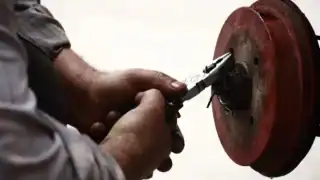
Where rotors show scoring, grooving, or are approaching minimum thickness, we’ll recommend Honda brake rotor replacement at the same time as the pad change. Running new pads against worn or glazed rotors shortens pad life and compromises braking feel. For drum brake models, including the rear drums on older Honda Jazz and some City variants, we inspect the drum surface, brake shoes, wheel cylinders, and adjusters as part of the same job.
Brake Fluid and Hydraulic System Checks
Honda’s service documentation specifies brake fluid replacement at set intervals, not just when a warning light appears. We test fluid condition as part of any brake service. If the fluid has absorbed moisture, we’ll let you know and quote the flush separately so you can make an informed call.
What Affects the Cost and Time for Honda Brake Replacement in Gatton
A straightforward front brake pad and rotor replacement on a Honda Civic or Jazz will generally take less time than the same job on a CR-V with an electronic parking brake. The complexity of your specific model, the condition of the existing hardware, and whether you opt for OEM-equivalent or genuine Honda parts all affect pricing. Caliper slides that are seized or brake hoses that are cracked will also add to the job. We tell you what we find before we proceed, not after.
Parts availability for common Honda models is generally strong. For older or less common variants, we handle sourcing directly through our workshop, so you’re not left chasing parts yourself.
Why Gatton Automotive Solutions for Your Honda Brakes
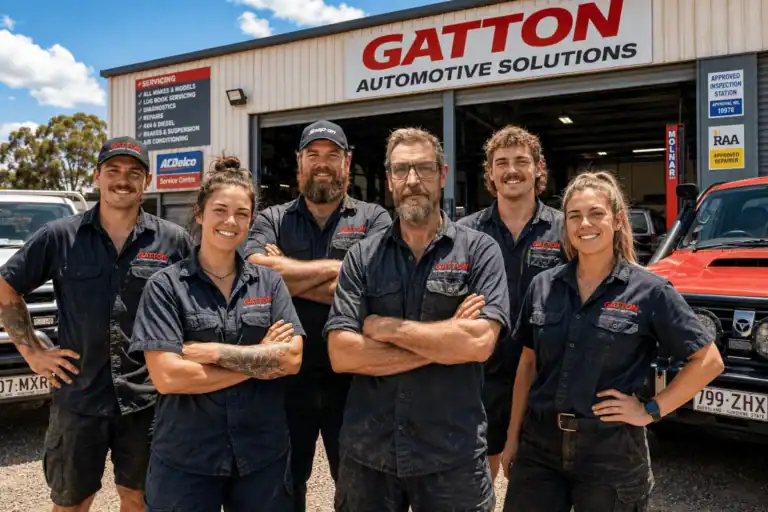
We’re a full-service workshop here in Gatton covering everything from everyday passenger cars and 4WDs through to trucks, heavy equipment, smash repairs, and agricultural machinery, all under one roof. You don’t need to drive to Ipswich or Toowoomba for a proper brake job on your Honda. We have the tooling for electronic parking brake service, the knowledge of Honda’s service schedules, and five-star reviews from local drivers who keep coming back.
Our pricing is straightforward. We don’t recommend work you don’t need, and we explain what we found and why a repair is warranted before any work begins. If your Honda only needs pads and not rotors, we’ll tell you that. If it needs more than you expected, we’ll show you why.
Book Your Free Inspection at Gatton Automotive Solutions
If you’re noticing any brake symptoms or you’re simply overdue for a check, Call Us Now or Book Your Free Inspection online. We’re here in Gatton and ready to get your Honda stopping safely again.