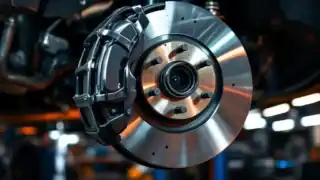
Brakes are the most safety-critical system on your vehicle, and Mitsubishi brake replacement is one of the most common jobs we handle at Gatton Automotive Solutions. Whether you’re driving a Triton ute through the Lockyer Valley, a Pajero on weekend trips, or an Outlander doing the daily school run, worn brake components are not something to sit on. The good news is that catching the problem early usually means less expense and a straightforward repair rather than a more involved job down the track.
Warning Signs Your Mitsubishi Needs Brake Work
Mitsubishi’s range covers everything from compact hatchbacks to heavy-duty utes, and the brake wear patterns can differ significantly between models. A Triton used for towing or running on dusty roads around Gatton will chew through rear brake pads and shoes faster than a Mirage doing highway kilometres. Knowing what to watch for makes a real difference.
- Squealing or squeaking when you apply the brakes, especially first thing in the morning or during light braking. This is often the wear indicator built into the pad telling you it’s time for a change.
- Grinding or metal-on-metal scraping — this means the pad material has worn through and the backing plate is contacting the rotor directly, which can score the rotor surface.
- A soft or spongy brake pedal that travels further than usual before the brakes engage.
- Vibration or pulsing through the pedal when braking, which often points to warped rotors or uneven rotor wear.
- Pulling to one side under braking, which can indicate a stuck caliper or uneven pad wear between sides.
- Longer stopping distances, particularly noticeable when following traffic or braking on a wet road.
If your Mitsubishi’s ABS warning light or brake warning light has come on, that’s a signal to get the system inspected promptly. Some Mitsubishi models, including the Outlander and ASX, use an electronic parking brake that integrates with the vehicle’s stability and traction control systems. Faults in these systems can trigger warning lights that look like simple brake alerts but require more than just a pad swap to resolve.
What Happens During a Mitsubishi Brake Replacement at Gatton Automotive Solutions
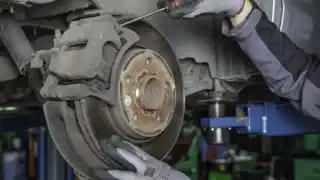
We start with a full brake system inspection before any parts are ordered or fitted. That means checking pad thickness on all four corners, measuring rotor thickness and checking for scoring or heat cracking, inspecting brake drums and shoes on models that run rear drums (the Triton dual cab and several older Mitsubishi models use rear drum setups), and examining calipers for seized pistons or fluid leaks.
Mitsubishi’s service documentation specifies minimum rotor thickness tolerances, and we work to those figures rather than guessing. A rotor that looks okay visually may already be below the minimum safe thickness, particularly if it’s been machined at a previous service. We measure before we advise, and we’ll show you the readings if you want to see them.
For Mitsubishi brake pad replacement, we use quality friction materials that meet or exceed OEM specifications for your specific model. On vehicles like the Pajero Sport or Triton that are used for towing or off-road work, we can discuss pad compounds suited to heavier-duty use. Mitsubishi brake shoe replacement on older Tritons and Mitsubishi vans involves a more involved disassembly of the drum assembly, hardware springs, and adjusters, so we factor that into the job scope from the start rather than discovering it mid-repair.
After fitting new components, we bed the brakes in correctly and check that all caliper slide pins are clean and lubricated. A brake job that skips the caliper and hardware service can lead to uneven wear that has you back in the workshop sooner than you should be.
What Affects the Cost of Mitsubishi Brake Replacement?
A few factors shape how involved a brake job ends up being. The main ones are:
- Axle and component type: front disc pads are typically a quicker job than rear drum shoe replacement, which involves more disassembly.
- Rotor condition: if Mitsubishi brake rotors replacement is required because they are worn below minimum thickness or badly scored, they need replacing rather than machining. Some Mitsubishi models have rotors that are economical to replace outright.
- Caliper condition: seized calipers need to be reconditioned or replaced, which adds to the job scope.
- Parts specification: OEM-equivalent parts sourced for your specific Mitsubishi model versus more generic aftermarket options can affect both price and lead time.
We’ll give you a clear picture of what’s needed before any work begins. No surprises mid-job.
Why Gatton Drivers Choose Us for Mitsubishi Brake Work
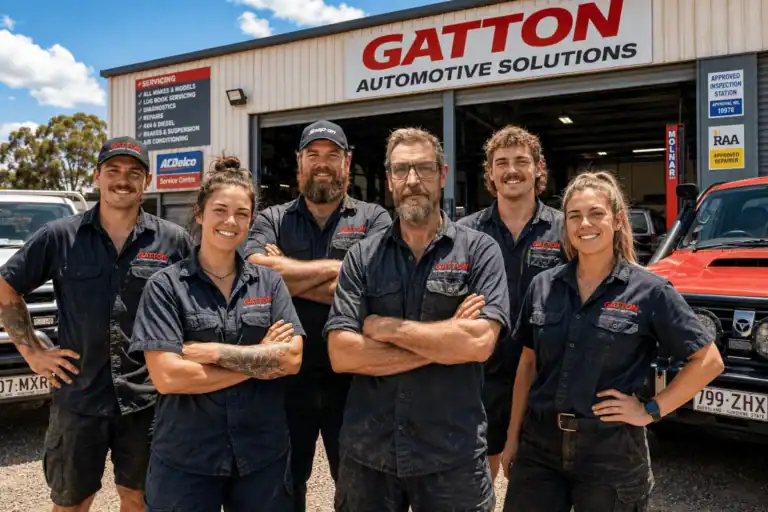
We’re a full-service workshop right here in Gatton, which means you don’t need to drive to Ipswich or Toowoomba for a brake job. We handle everything from passenger cars and Mitsubishi SUVs through to utes, trucks, and heavy equipment, so there’s no job we’ll turn away because it’s outside our scope. Parts sourcing is handled in-house, roadworthy certificates are issued on-site, and with five-star reviews from local customers, our reputation speaks for the work we do.
If your Mitsubishi needs same-day attention, we offer fast while-you-wait servicing for straightforward brake repairs where our schedule allows. Fleet operators running Mitsubishi Tritons or Canters are also welcome to talk to us about keeping vehicles on the road with minimum downtime.
Ready to Get Your Brakes Checked?
If you’ve noticed any of the warning signs above, don’t delay. Book Your Free Inspection online or Call Us Now and we’ll get your Mitsubishi booked in at our Gatton workshop as soon as possible.