Limited Time: Free Windscreen Wipers With Any Service. Subject To Availability.

Locally Owned & Operated
Honest Upfront Pricing
5★ Reviews
All Makes & Models

Verified 5★ Reviews

Tried & Trusted Mercedes Brake Replacement In Gatton

We inspect and replace Mercedes brake components to factory specification. You'll get a full safety check and honest advice on what your brakes actually need.

One-Stop Workshop

Honest Advice

5★ Reviews

Mercedes Brake Specialists

Book Your Free Inspection

Tell us what you need and we'll get back to you with a clear quote.

Booking Form
  • Vehicle Details
  • Confirm Vehicle
  • Services
  • Contact Details
Honest Quotes
All Vehicle Types
Local & Reliable

Why Book With Us

Book Your Free Inspection
Drop Off Your Vehicle
We Get to Work
Collect Your Car

Mercedes-Benz vehicles are engineered with high-performance braking systems designed to work in harmony with their suspension geometry, stability control, and electronic driver aids. A Mercedes brake replacement isn’t a one-size-fits-all job — it requires an understanding of how these components interact across different model lines and driving conditions. At Gatton Automotive Solutions, we service Mercedes vehicles for drivers across the Lockyer Valley, handling everything from brake pad changes through to full rotor and caliper work on a wide range of models.

Warning Signs Your Mercedes Brakes Need Attention

Mercedes braking systems are generally reliable, but they do give clear signals when it’s time to act. Ignoring these signs doesn’t just affect performance – it can escalate a straightforward brake pad replacement into a far more involved repair.

  • Squealing or high-pitched noise when braking – Most Mercedes brake pads include a wear indicator that produces this sound deliberately when the pad material gets low. It’s a feature, not a fault, but it means replacement is due soon.
  • Grinding or metal-on-metal sound – This typically means the pad has worn through completely, and the backing plate is contacting the rotor. Brake rotor replacement is likely at this point.
  • Pulling to one side under braking – Can indicate uneven pad wear, a sticking caliper, or an issue with the brake fluid circuit. Mercedes vehicles with electronic stability systems may mask this until it becomes pronounced.
  • Pulsing or vibration through the brake pedal – Often a sign of rotor warping or uneven wear across the rotor face, particularly common after sustained heavy braking.
  • Longer stopping distances – If your Mercedes feels like it needs more pedal pressure than usual to slow down, the brake system needs inspection regardless of whether any noise is present.
  • Warning light on the dashboard – Many Mercedes models have electronic brake wear sensors that trigger a dashboard alert. This is a direct signal from the vehicle to inspect and replace the affected pads.

What Does a Mercedes Brake Replacement Actually Involve?

The job varies depending on which components need attention. A brake pad change on a Mercedes is more involved than on many other vehicles because the pads on certain models need to be initialised through the vehicle’s electronic system after fitting – simply bolting in new pads without this step can lead to premature wear or reduced braking efficiency.

We start with a full inspection of the brake system before any parts are ordered or fitted. This includes measuring rotor thickness against Mercedes minimum specifications, checking pad wear across all four corners, examining brake fluid condition (Mercedes recommends fluid replacement on a set interval regardless of visible contamination), and inspecting caliper slides and pistons for seizure or uneven movement.

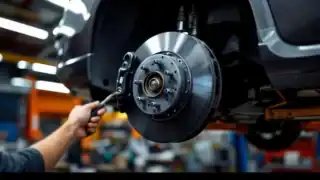
For Mercedes rear brake pad replacement on models with electric parking brakes, the rear caliper pistons must be retracted using a specific tool and procedure – they cannot be wound back manually like conventional calipers. Skipping this step can damage the caliper motor. Our team is equipped and familiar with this procedure across common Mercedes models.

Where brake drum replacement is needed on older rear-drum configurations, we inspect the drum surface, check wheel cylinder condition, and assess the self-adjusting mechanisms that are commonly overlooked during basic servicing.

Parts and Specification Alignment for Mercedes Vehicles

Mercedes-Benz specifies particular friction compounds for different model lines – AMG variants, for example, have larger rotor diameters and caliper configurations that require pads matched to that thermal load. We source OEM-equivalent or OEM parts depending on the model, application, and what the customer prefers. The goal is to restore the braking feel and performance the vehicle was designed to deliver, not just fit whatever is cheapest off the shelf.

What Affects the Cost and Time of Mercedes Brake Work?

Several factors influence what a brake job will involve for your particular vehicle. The model and year matter – brake components on a C-Class differ significantly from those on a GLE or Sprinter. Whether the rotors need replacement alongside the pads affects both cost and time, as does the condition of the calipers and whether the brake fluid needs changing at the same service.

Parts availability is generally good for common Mercedes passenger models, but some components may need to be ordered, particularly for less common variants or older AMG configurations. We handle parts sourcing directly through the workshop, so you don’t need to chase parts suppliers yourself. We’ll give you a clear picture of what’s needed and what it will cost before any work starts – no surprises, no unnecessary additions.

Why Gatton Drivers Choose Us for Mercedes Brake Work

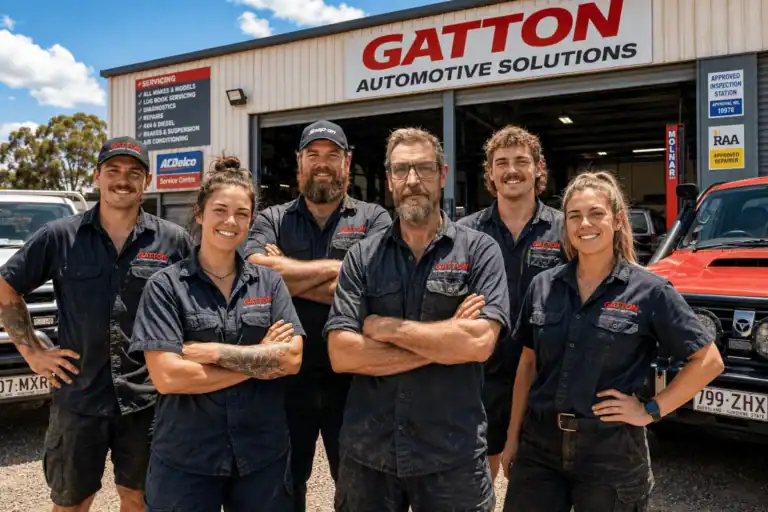
Gatton Automotive Solutions is a full-service workshop covering cars, 4WDs, trucks, and heavy equipment under one roof. For Mercedes owners in the Lockyer Valley, that means you’re not driving 45 to 80 kilometres to Ipswich or Toowoomba for a brake service when we can handle it locally with the same quality of work.

We’re locally owned and operated, and we’ve built a reputation around honest advice and fair pricing. We hold five-star reviews because we tell customers what they actually need, not what adds up to a bigger job. Roadworthy certificates are issued on-site too, so if your Mercedes is due for a safety inspection alongside the brake work, that can be handled in the same visit.

Whether it’s a routine Mercedes brake pad change or a more involved rear brake replacement, the job gets the attention it deserves. Fast while-you-wait servicing is available for straightforward pad replacements where parts are in stock.

If you’ve noticed any of the warning signs above, or your Mercedes is simply due for a brake inspection, Book Your Free Inspection online or Call Us Now to talk through what your vehicle needs at our Gatton workshop.
Other Services

Whatever your needs we have you covered, see some similar services below or click "See All Services" to explore our full service offering.

Your Local Workshop for Every Vehicle

Gatton Automotive Solutions is the one-stop shop for cars, 4WDs, trucks, and heavy equipment. Honest advice and fair pricing, right here in Gatton.

Honest Pricing, No Surprises

We tell you what’s needed and what it costs before we start. No upselling, no pressure.

Everything Under One Roof

Bring your car in and we’ll inspect it, explain what we find, and quote you upfront.

Mercedes-Specific Brake Diagnostics

We use Mercedes diagnostic equipment to identify brake issues accurately, no guessing.

How Mercedes Brake Replacement Works

From booking to collection, here's how we handle your Mercedes brake replacement safely and professionally.

Step 1

Book Your Free Inspection

Call Us Now or book your free inspection online to get your Mercedes brakes checked promptly.

Step 2

Mercedes Brake System Inspection

We measure pad thickness, rotor condition, and fluid quality using Mercedes-specific diagnostic procedures.

Step 3

Precision Brake Replacement

We fit quality brake pads and rotors to Mercedes specifications, then bleed the system completely.

Step 4

Safety Test and Handover

We test brake response, walk you through the work, and confirm your Mercedes is road-ready.

Five-Star Rated

Verified 5★ Reviews

Quality Parts From Trusted Suppliers

We use genuine and quality aftermarket parts from reputable suppliers. You get reliable components backed by proper warranties.

Book Your Free Inspection

Tell us what you need and we'll get back to you with a clear quote.

Booking Form
  • Vehicle Details
  • Confirm Vehicle
  • Services
  • Contact Details
Honest Quotes
All Vehicle Types
Local & Reliable

Why Book With Us

Book Your Free Inspection
Drop Off Your Vehicle
We Get to Work
Collect Your Car

Frequently Asked Questions

Browse answers to common questions about our services. Can't find what you're after? Give us a call and we'll help.

The most common signs are a squealing or grinding noise when you brake, a pulsing feeling through the brake pedal, the car pulling to one side, or the brake warning light coming on. Mercedes vehicles use brake pad wear sensors that trigger a dashboard alert before the pads reach a critical level, so if that light appears, do not ignore it. Any of these signs are worth getting checked promptly rather than waiting for your next service.

Driving on worn brakes is a genuine safety risk. A squealing sound usually means the wear indicators are active and the pads are running low. Grinding almost always means metal-on-metal contact, which can damage the rotors quickly and significantly increase your stopping distance. The longer you wait, the more expensive the repair tends to become. If you are hearing noises or feeling anything unusual through the pedal, have the brakes inspected as soon as you can.

We start with a full inspection of the brake system, covering pad thickness, rotor condition, caliper operation, and brake fluid. From there we replace whatever needs replacing, whether that is just the pads, the pads and rotors together, or rear brake shoes on older models. Mercedes-specific wear sensors are checked and replaced if needed. We then bed the brakes in correctly and test the vehicle before it leaves. You will know exactly what was done and why.

A few things drive the cost up or down. The main factors are whether you need pads only or pads and rotors, which axle needs attention (front, rear, or both), the specific Mercedes model, and the grade of parts used. Mercedes vehicles generally require higher-specification parts than economy cars, which is reflected in pricing. We will always give you a clear breakdown before any work starts so there are no surprises.

Under general Australian Consumer Law, as outlined in ACCC guidance, you are not required to have your vehicle serviced at a dealership to maintain your manufacturer warranty, provided the work is carried out correctly and appropriate parts are used. This is general information rather than legal advice, and we recommend checking your specific warranty terms if you are unsure. Our team at Gatton Automotive Solutions services Mercedes vehicles regularly and works to manufacturer specifications.

Mercedes vehicles, particularly newer models with electronic parking brakes, require specialist scan tools to retract the rear caliper pistons during a brake pad change. Without the right equipment, the job simply cannot be done properly. Some AMG and higher-performance variants also have larger brake assemblies with specific torque requirements. We have the diagnostic equipment needed to handle these correctly, so the rear brakes are not a guesswork job here.

We use quality OEM-equivalent or genuine parts depending on your preference and budget. OEM-equivalent brake components from reputable manufacturers are built to the same specifications as genuine Mercedes parts and are a common choice for cost-conscious owners who still want quality. If you want genuine Mercedes-branded components, we can source those too. Either way, we will talk you through the options before anything is ordered.

A standard brake pad and rotor replacement on one axle typically takes around one to two hours. If both axles need attention or there are additional issues to address, it will take longer. For straightforward jobs, same-day turnaround is usually achievable. Drivers coming in from around the Lockyer Valley can often have their Mercedes sorted and back on the road the same day without needing to travel to Ipswich or Toowoomba.

There is no fixed interval because brake wear depends heavily on how and where you drive. Stop-start driving around town wears pads faster than open highway driving. As a general guide, pads on many vehicles need attention somewhere between 30,000 and 70,000 kilometres, but your Mercedes will usually alert you via the wear sensor warning light before you reach a critical point. Getting the brakes checked during each service is the simplest way to stay ahead of it.

If the rotors are within serviceable thickness and not deeply scored or warped, replacing the pads alone is perfectly reasonable. We measure rotor thickness and check for surface condition before recommending anything. Replacing pads on worn or damaged rotors is a waste of money because you will get uneven braking and the new pads will wear faster. We only recommend rotor replacement when the inspection shows it is actually needed, not as a default add-on.

Continue to site