Your Land Rover’s braking system works harder than most drivers realise. These are heavy, capable vehicles built for both sealed roads and rough terrain, and the braking components are sized and calibrated to match that workload. When something in that system starts to wear or fail, the consequences matter. Land Rover brake replacement is not a job to put off, and if you’re in Gatton or anywhere across the Lockyer Valley, you don’t need to drive to Ipswich or Toowoomba to get it done properly.
Warning Signs That Your Land Rover’s Brakes Need Attention
Land Rover drivers often notice brake issues in predictable ways. The most common is a high-pitched squeal when braking, which is usually the wear indicator on the brake pads making contact with the rotor. That sound is there by design, and it means the pads are close to the end of their service life.
Beyond noise, watch for these signs:
- A grinding or growling sensation when you press the brake pedal, which typically means the pad material has worn through and metal is contacting the rotor
- A pulsing or shuddering pedal under braking, often caused by warped rotors or uneven rotor surfaces
- The vehicle pulling to one side when braking, which can point to a seized caliper or uneven pad wear across an axle
- A soft or spongy pedal that travels further than usual before the brakes bite, which may indicate air in the brake lines or a hydraulic issue
- Visible rust or scoring on the rotor face, particularly on vehicles that sit parked for extended periods or are used frequently on dirt tracks
Discovery and Defender models used as farm or work vehicles around Gatton often see accelerated brake wear on the rear axle, particularly if they’re towing regularly. If your Land Rover is doing that kind of work, it’s worth having the brakes inspected more frequently than the standard service interval suggests.
What Land Rover Brake Replacement Involves at Our Workshop
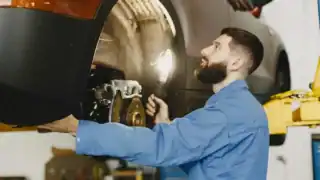
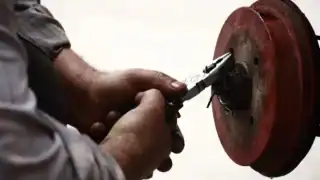
We start with a proper inspection before any parts are ordered. That means removing the wheels, measuring rotor thickness and checking for runout (a slight wobble or distortion in the rotor that causes pedal pulsation), assessing pad depth on all four corners, and checking caliper operation. On Land Rover models with electronic parking brake systems, such as the Discovery 4 and Discovery Sport, the rear calipers require specific electronic reset procedures when replacing the rear pads. We work through that process correctly rather than forcing the caliper pistons back manually, which can damage the mechanism.
For the brake pads themselves, we source quality parts to OEM specification. Land Rover’s braking systems are engineered to specific friction coefficients and temperatures, and fitting undersized or incompatible pads can affect pedal feel and stopping distances. Where rotors need replacement, we assess whether machining is a viable option or whether full rotor replacement is the right call based on the remaining material and the rotor’s condition.
We also check brake fluid condition during any brake service. Brake fluid absorbs moisture over time, which lowers its boiling point and can contribute to brake fade under hard use. Land Rover specifies DOT 4 fluid for most models, and a fluid flush is often worth doing alongside a full pad and rotor replacement.
What Affects the Cost and Time of Land Rover Brake Work?
Several factors influence how long a brake job takes and what it costs. The specific model matters significantly. A Defender 110 with larger brake components costs more in parts than a Freelander 2, and a Discovery 4 with electronic rear calipers involves more labour than a straightforward manual caliper setup.
Whether you need pads only, pads and rotors, or a full axle rebuild including calipers and brake lines will obviously affect the total. We’ll give you a clear picture of what’s actually needed after we inspect the vehicle, and we won’t quote for parts you don’t need. If only the front brake pads need replacing and the rears are fine, that’s what we’ll tell you.
Parts availability for Land Rover can vary depending on the model and year. We handle parts sourcing in-house, which saves you the back-and-forth of chasing parts yourself. Lead times on some components can affect how quickly the job gets done, so it’s worth calling ahead if timing matters to you.
Can Brake Work Be Done While You Wait?
For straightforward pad replacements, yes, we can often turn these around while you wait. More involved jobs, particularly those requiring parts to be ordered or where we find additional issues during the inspection, will take longer. We’ll give you an honest timeframe once we know what we’re dealing with.
Servicing Land Rovers in Gatton and Across the Lockyer Valley
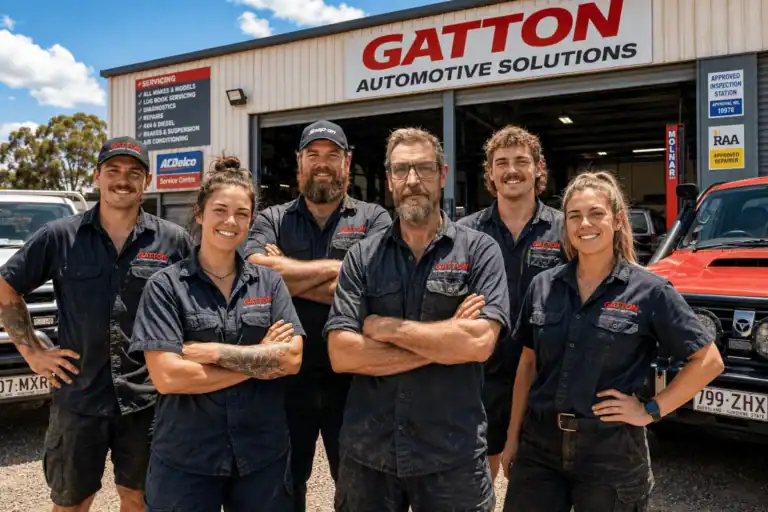
Gatton Automotive Solutions is a full-service workshop handling everything from everyday passenger cars through to heavy vehicles and farm equipment. Land Rovers are a common sight across the Lockyer Valley, from daily drivers to working farm vehicles, and we see a broad range of models including Defender, Discovery, Freelander, and Range Rover variants. Our five-star reviews reflect the kind of work we do and the way we deal with customers, which is straight and without the upselling.
You don’t need to take your Land Rover to a dealership in Toowoomba or a specialist workshop in Ipswich for brake work. We carry out roadworthy certificates on-site as well, so if your Land Rover needs a safety inspection alongside the brake service, that can be handled here too.
If you’ve noticed any of the warning signs above, or if you’re just not sure when your brakes were last checked, Book Your Free Inspection online or Call Us Now to talk through what your Land Rover needs in Gatton.