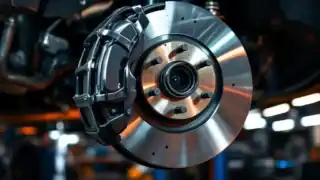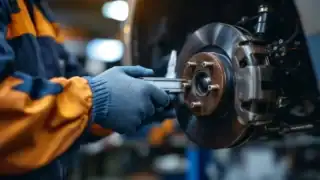
Your brakes are the most important safety system on your Mazda, and when something feels off, it’s worth taking seriously. Mazda brake replacement covers everything from worn front brake pads to rear brake shoes, rotors, drums, and hardware, depending on your model and how it’s been driven. At Gatton Automotive Solutions, we handle the full scope of brake work on Mazdas regularly, from everyday hatchbacks and sedans to the larger SUVs that have become common on roads throughout the Lockyer Valley.
Warning Signs Your Mazda Needs Brake Work
Brake wear doesn’t always announce itself dramatically. Sometimes the signs are subtle, and catching them early makes a real difference to both safety and cost. Here’s what to pay attention to:
- Squealing or grinding when braking: A high-pitched squeal usually means the wear indicators built into the pads are contacting the rotor. Grinding is more serious and often means the pad material has worn completely through.
- Pulling to one side under braking: If your Mazda drifts left or right when you apply the brakes, it can indicate a stuck calliper, uneven pad wear, or a difference in rotor thickness between sides.
- A soft or spongy brake pedal: This usually points to air in the brake lines or a fluid issue rather than a pad problem, but it’s a reason to get the system checked promptly.
- Vibration through the pedal or steering wheel: Pulsing when braking is a common sign that rotors have warped or developed uneven wear, something that turns up frequently on Mazda models that do a lot of stop-start town driving.
- The brake warning light is on: Some Mazda models will flag low brake pad thickness through the dashboard. Don’t ignore it, even if the car feels normal.
Even if none of these apply, pads and shoes should be inspected at every service. Brake components wear at different rates depending on driving style, load, and terrain, and the hilly stretches around the Lockyer Valley and out toward the range can accelerate wear on rear brakes in particular.
How We Inspect and Replace Mazda Brakes
We start by checking the full braking system, not just the obvious worn component. That means measuring pad and shoe thickness, checking rotor and drum surfaces for wear, scoring, or warping, inspecting callipers and wheel cylinders for leaks or binding, and looking at brake lines, hoses, and fluid condition. Mazda uses a range of brake configurations depending on the model year and spec: older Mazda 2 and some Mazda 3 variants run drum brakes at the rear, while later BM and BP generation Mazda 3s, the CX-5, and CX-9 are typically disc-all-round. We confirm the correct configuration before any work begins.
One Mazda-specific detail worth knowing: several Mazda 3 and CX-5 models use an electric parking brake integrated with the rear callipers. Replacing the rear pads on these vehicles requires a specific procedure to retract the calliper piston electronically, not manually like a standard handbrake setup. Attempting to compress the piston by hand on these models can damage the calliper motor. We have the tooling to handle this correctly.
Parts selection is handled with your Mazda’s specifications in mind. We can source OEM-equivalent brake pads, rotors, drums, and shoes that meet Mazda’s original friction and thermal specifications. For higher-mileage vehicles or those used in harsher conditions, we’ll discuss whether an upgraded compound is worth considering, without pushing you toward unnecessary spending.
What Affects the Cost and Time for a Mazda Brake Job?
Brake replacement on a Mazda varies depending on a few straightforward factors. Front pads on a Mazda 2 or Mazda 3 are relatively straightforward. Rear pad replacement on a CX-5 or CX-9 with an electric parking brake takes a bit more time and care. Resurfacing or replacing rotors adds to the job, but it’s often the better choice over running new pads against a damaged surface. Drums on older models may need machining or replacing depending on their measured thickness. We’ll tell you upfront what’s needed and what can wait, rather than quoting for everything at once.
The full picture also depends on how long the wear has been progressing. Pads replaced before they reach metal-on-metal contact almost always mean the rotors can be saved. Leaving it longer often means replacing components that would otherwise have been fine.
Brake Service in Gatton Without the Drive to Ipswich or Toowoomba
Having your Mazda’s brakes sorted locally matters, particularly when driving on worn pads isn’t ideal in the first place. Gatton Automotive Solutions is a full-service workshop that handles everything from a basic pad change through to disc machining, drum replacement, and brake fluid flushes, all without the 45-80km round trip to a larger city. We also issue roadworthy certificates on-site, so if your Mazda needs a brake inspection as part of a safety check, that’s handled in the same place. Our five-star reviews reflect the way we work: honest assessments, no unnecessary upselling, and straight pricing.
If your Mazda is showing any of the symptoms above, or if it’s just been a while since the brakes were properly looked at, Call Us Now or Book Your Free Inspection online. We’re ready to help drivers across Gatton and the surrounding Lockyer Valley get back on the road confidently.