Land Rover brake repair is not something to put off. These vehicles are built for serious work, whether that’s school runs around Gatton, long hauls on the Warrego Highway, or getting in and out of properties across the Lockyer Valley. The braking system on a Land Rover is more complex than most passenger cars, and when something’s not right, it shows up in ways that are hard to ignore. Getting it looked at promptly by a brake mechanic familiar with these vehicles is the right call every time.
Warning Signs Your Land Rover Needs a Brake Inspection
Land Rovers are known for their weight and all-terrain capability, which means the braking system works harder than it would on a lighter vehicle. The pads, rotors, and brake fluid all take on significant load, especially if you’re towing, running a bull bar, or driving on unsealed roads. Knowing the early warning signs can save you from a much bigger repair job down the track.
- Squealing or grinding noise when you press the brake pedal, particularly on the first few stops of the day
- A pulsing or vibrating pedal when braking, which often points to warped rotors
- The brake pedal feels soft or spongy, or sinks lower than usual before the brakes engage
- Pulling to one side when braking, which can indicate uneven pad wear or a sticking calliper
- The brake warning light appearing on the instrument cluster, including the electronic park brake warning common on Discovery and Defender models
- Longer stopping distances than you’d normally expect, especially at highway speeds
Any one of these symptoms warrants a proper inspection. Two or more together mean you should stop driving the vehicle until it’s been assessed.
How We Inspect and Repair Land Rover Braking Systems
Land Rover vehicles, including the Defender, Discovery, Discovery Sport, and Range Rover series, use electronic brake management systems that go well beyond a simple pad-and-rotor setup. Many models use electronic parking brakes, hill descent control, and integrated stability systems that all interact with the main braking circuit. A proper inspection has to account for all of that, not just the mechanical wear items.
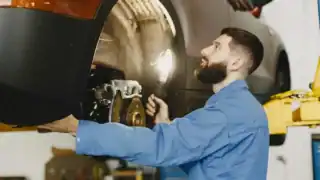
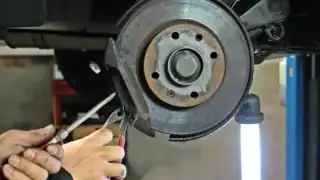
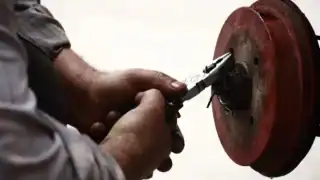
When your Land Rover comes in, we start with a visual check of the brake pads, rotors, and callipers on all four corners. We measure rotor thickness and check for scoring or heat cracking. From there, we test brake fluid condition, checking moisture content since degraded fluid raises the boiling point and leads to brake fade under load. On models with electronic park brakes, we use diagnostic scanning to check for stored fault codes before any mechanical work begins. This matters because an electronic brake fault on a Defender or Discovery Sport can sometimes mimic mechanical symptoms, and replacing parts without scanning first risks missing the actual cause.
Once we know exactly what’s needed, we walk you through it before any work starts. We source brake components to OEM specification or genuine-equivalent quality suited to your specific Land Rover model, whether that’s a Defender 90 or 130, a third-generation Discovery, or a Range Rover Sport. Fitting economy-grade parts on a vehicle designed to manage its own weight plus a loaded trailer is a false economy, and we’ll be straight with you about that.
What Affects the Cost and Time of Land Rover Brake Work in Gatton?
A few variables come into play. The main ones are which components need replacing, whether it’s pads only or pads and rotors together, and whether the callipers need servicing or replacement. Land Rover brakes vary significantly across the model range. A Discovery Sport running Brembo-style front callipers has different parts and labour requirements than a workhorse Defender with a more conventional setup.
Parts availability is something we handle for you. Our workshop manages parts sourcing in-house, so you’re not chasing down a supplier yourself or waiting days with no update. For Land Rover components, genuine or quality OEM-equivalent parts can take longer to arrive than mass-market brands, and we’ll give you an honest timeline when we know what’s needed. Electronic parking brake resets after pad replacement also add a small amount of time to the job since they require the correct diagnostic tooling rather than a manual wind-back procedure.
Honest Brake Work From a Workshop That Knows Land Rovers
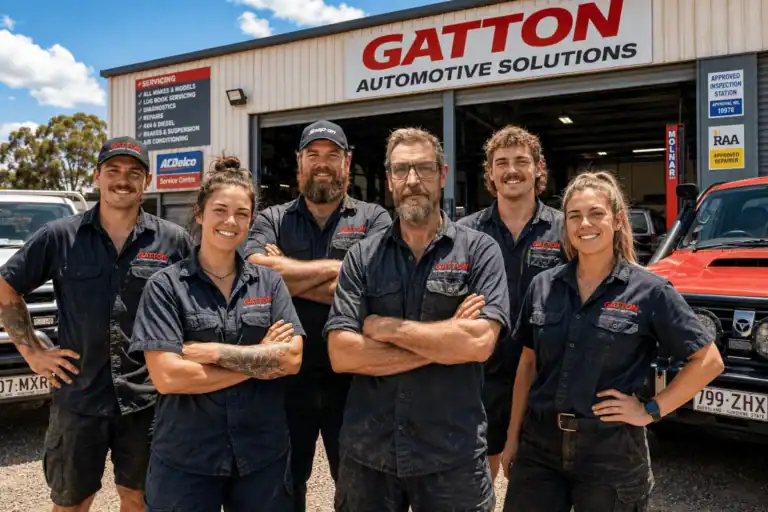
Gatton Automotive Solutions is a full-service workshop covering everything from everyday passenger cars through to 4WDs, trucks, and heavy equipment. We issue roadworthy certificates on-site, handle suspension upgrades and tyre fitting, and carry out smash repairs and paintwork, all without you needing to drive to Ipswich or Toowoomba. For Land Rover owners in Gatton and across the Lockyer Valley, that means one place handles the inspection, the repair, and the RWC if it’s required as part of a sale or registration check.
We work on all Land Rover models and don’t tell you something needs replacing unless it does. Our approach is straightforward: inspect it properly, explain what we found, price it fairly, and do the work right. With five-star reviews behind us, that approach has earned a bit of a reputation around here.
If your Land Rover is showing any of the symptoms above, or you just want peace of mind before a long drive, Call Us Now or use the online booking form to Book Your Free Inspection with the team here in Gatton.