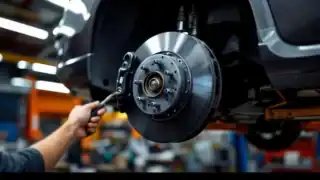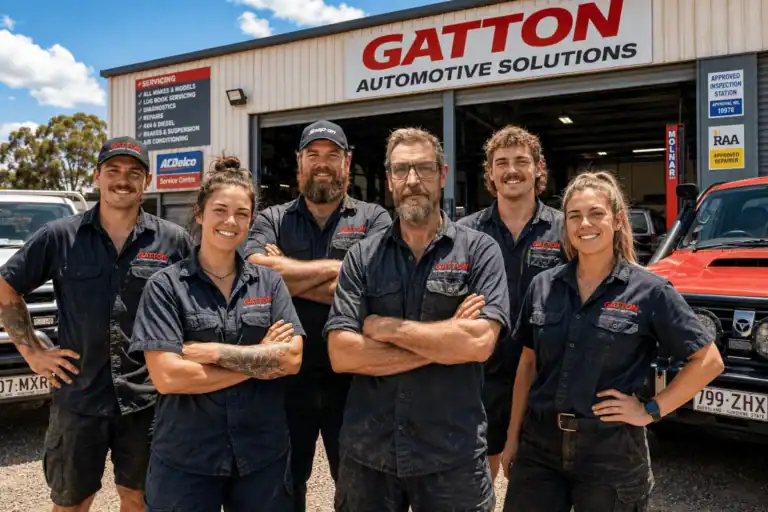
Mercedes-Benz vehicles are engineered with sophisticated braking systems that require careful attention when something feels off. Mercedes brake repair isn’t simply a matter of swapping worn pads – these vehicles use electronic brake force distribution, adaptive braking assist, and in many models, integrated stability control systems that all depend on the brake components being in good working order. At Gatton Automotive Solutions, we work on Mercedes vehicles alongside cars, 4WDs, utes, and heavy equipment, so whether you’re driving a C-Class around town or an ML in the paddock, we can take a proper look.
Warning Signs Your Mercedes Brakes Need Attention
Mercedes drivers often notice something is off before the situation becomes serious. The trick is knowing which signs are worth acting on immediately and which indicate a scheduled inspection is overdue.
- Squealing or squeaking when braking: Mercedes brake pads include wear indicators that produce a high-pitched sound when the friction material gets low. This is intentional – it’s designed to get your attention before metal contacts metal.
- Grinding or scraping noise: If squealing has progressed to grinding, the pads have likely worn through and the caliper or backing plate is contacting the rotor (the disc the pads press against to slow the car). This needs immediate attention.
- Longer stopping distances: If your car is taking noticeably more distance to stop, especially from highway speeds, this is a safety concern regardless of whether a warning light has come on.
- Brake warning light or ABS light on the dash: Mercedes uses a CAN bus system (a network that links the car’s electronic modules), and brake-related faults often trigger warning lights tied to the ABS or electronic stability systems. A light on the dash is the car asking for a diagnostic scan, not just a visual check.
- Pulsing or vibration through the brake pedal: This typically points to rotor runout or thickness variation – the discs have warped slightly and the pads are catching unevenly as the wheel rotates.
- Soft or spongy pedal feel: Mercedes brake systems are sensitive to air in the brake lines or brake fluid that has absorbed moisture over time. Fluid condition should be checked as part of any brake service.
How We Approach Mercedes Brake Diagnostics and Repair in Gatton
The first step is always a thorough inspection before any parts are recommended. We measure pad thickness against manufacturer specifications, check rotor condition for scoring, cracking, or minimum thickness, and inspect caliper operation to make sure the pistons are extending and retracting correctly. On Mercedes models with electronic parking brake systems – common across the C-Class, E-Class, GLC, and GLE range – caliper retraction requires a scan tool to wind back the piston correctly. Doing this manually without the right equipment can damage the caliper or trip a fault code in the brake control module.
If a warning light is present, we connect a diagnostic scanner to read the specific fault codes stored in the ABS module or brake control unit. This tells us whether the fault is a sensor issue, a wiring fault, a hydraulic problem, or simply a consequence of worn components. We identify the root cause before recommending work, not after.
For brake fluid, Mercedes specifies a low-viscosity DOT 4 fluid in most models, and the manufacturer recommends replacing it every two years regardless of mileage because brake fluid absorbs moisture from the air over time. Wet brake fluid has a lower boiling point, which can lead to brake fade under hard use. We check fluid condition as part of any brake inspection.
Parts: OEM-Spec vs Aftermarket for Mercedes
Mercedes-Benz brakes are designed around specific friction compounds and rotor metallurgy. Using parts that meet or closely match the original specification matters more on these vehicles than on many others – partly because of the integrated electronic systems, and partly because substandard rotors can cause judder and uneven wear that affects ride comfort and braking feel. We source quality parts that align with the vehicle’s requirements and discuss options with you before ordering, so you understand what’s being fitted and why.
What Affects the Cost and Time for a Mercedes Brake Job
Brake repair costs vary depending on how many axles need attention, whether rotors need replacing alongside pads, and the specific model and variant. A C200 sedan and a G-Class 4WD have very different brake components and part costs. Rear brakes on models with electronic parking brake systems take longer because of the additional recalibration step. If a caliper has seized or a brake line has corroded, that adds to both time and parts. We’ll give you a clear picture of what’s needed and what it will cost before any work starts.
Why Gatton Drivers Bring Their Mercedes to Us
Being locally owned and operated in Gatton means we’re genuinely accessible – you don’t need to drive to Ipswich or Toowoomba for a Mercedes brake specialist when we’re right here in the Lockyer Valley. We’re a full-service workshop covering everything from everyday passenger cars to heavy vehicles and farm equipment, which means we’re well equipped for the range of Mercedes models that come through the door. Our five-star reviews reflect the straightforward approach we take: we tell you what we found, explain what it means, and give you honest advice on what needs doing now versus what can wait.
If your Mercedes is showing any of the signs above, Book Your Free Inspection online or Call Us Now. Our team at Gatton Automotive Solutions is ready to help you get your brakes sorted properly.