Limited Time: Free Windscreen Wipers With Any Service. Subject To Availability.

Locally Owned & Operated
Honest Upfront Pricing
5★ Reviews
All Makes & Models

Verified 5★ Reviews

Highly Rated Mitsubishi Brake Specialist In Gatton

We inspect and repair Mitsubishi brakes in Gatton using factory-standard parts and honest advice. Safe, reliable braking is the goal - and we tell you exactly what is needed before any work begins.

One-Stop Workshop

Honest Advice

5★ Reviews

Mitsubishi Brake Experts

Book Your Free Inspection

Tell us what you need and we'll get back to you with a clear quote.

Booking Form
  • Vehicle Details
  • Confirm Vehicle
  • Services
  • Contact Details
Honest Quotes
All Vehicle Types
Local & Reliable

Why Book With Us

Book Your Free Inspection
Drop Off Your Vehicle
We Get to Work
Collect Your Car

Mitsubishi brake repair is one of the most common jobs we handle at Gatton Automotive Solutions, and for good reason. Brakes are the single most important safety system on your vehicle, and Mitsubishi’s lineup, from the Triton ute to the Outlander SUV to the ageing Lancer, puts real demands on brake components across a wide range of driving conditions. Whether you’ve noticed something off on the highway into Gatton or you’re long overdue for an inspection, getting your Mitsubishi’s brakes checked by someone who knows these vehicles is worth doing sooner rather than later.

Warning Signs Your Mitsubishi Brakes Need Attention

Mitsubishi owners often notice brake problems in a few predictable ways. The most common is a high-pitched squeal when braking, which is usually the wear indicator on the brake pads making contact with the rotor. That sound is by design, it means the pads are getting thin and it’s time to act. Ignore it long enough and the squeal turns into a grinding noise, which means metal is contacting metal and your rotors are likely being damaged.

Beyond noise, here are the symptoms worth taking seriously:

  • Brake pedal feels soft or spongy when pressed, which can point to air in the brake lines or a problem with the master cylinder
  • The pedal sits lower than usual or has to travel further before the brakes engage
  • Pulling to one side under braking, often caused by uneven pad wear or a sticking brake calliper
  • Vibration or pulsing through the pedal, commonly caused by warped brake rotors
  • A burning smell after driving, particularly after descending a long hill with the brakes applied
  • Brake warning light on the dashboard, which on many Mitsubishi models can indicate low brake fluid or a sensor fault

Any one of these symptoms warrants an inspection. More than one at the same time is a clear sign the brakes need work now, not next month.

How We Inspect and Repair Mitsubishi Brakes

We don’t guess. Our inspection starts with a proper assessment of every component in the braking system before any parts are quoted or ordered.

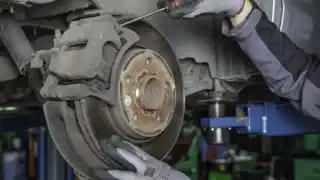
For Mitsubishi vehicles, this includes measuring the remaining pad thickness on all four corners, checking rotor thickness against manufacturer minimum specifications, and examining the callipers for sticking pistons or seized guide pins, a known issue on higher-kilometre Triton and Pajero Sport models particularly in dusty rural conditions. We also check the brake fluid condition, since Mitsubishi’s service schedule recommends brake fluid replacement every two years regardless of kilometres, and old fluid absorbs moisture which lowers its boiling point and reduces braking performance.

Where your Mitsubishi has an electronic parking brake or brake assist system, we check the associated sensors and actuators as part of the inspection. Newer Outlander and ASX models with these systems require proper reset procedures after certain brake work, which is something a simple pad swap won’t account for if it’s not done correctly.

Parts used are either OEM-equivalent or genuine Mitsubishi specification, matched to your specific model and variant. A Triton 4×4 working a farm property around the Lockyer Valley has different braking requirements to a family Outlander doing school runs, and we factor that into every recommendation we make.

What Affects the Cost and Time for a Brake Repair?

Brake repair costs vary, and we think you’re better off understanding why than being surprised by a bill. The main variables are how far the wear has progressed, whether the rotors need replacing or can be left, whether one axle or both need attention, and parts availability for your specific Mitsubishi model.

A straightforward front pad replacement is one of the quicker jobs we do, and many customers wait on-site while it’s completed. If the rotors are below minimum thickness, or if a calliper needs to be rebuilt or replaced, that adds time and cost. On some older Mitsubishi models, parts sourcing can affect turnaround, though we handle all our own parts ordering and will give you a clear timeline before work starts.

We’ll always tell you what we found, what we recommend, and what can wait if you need to stage the work across two visits. No pressure, no unnecessary extras.

Why Gatton Drivers Bring Their Mitsubishis to Us

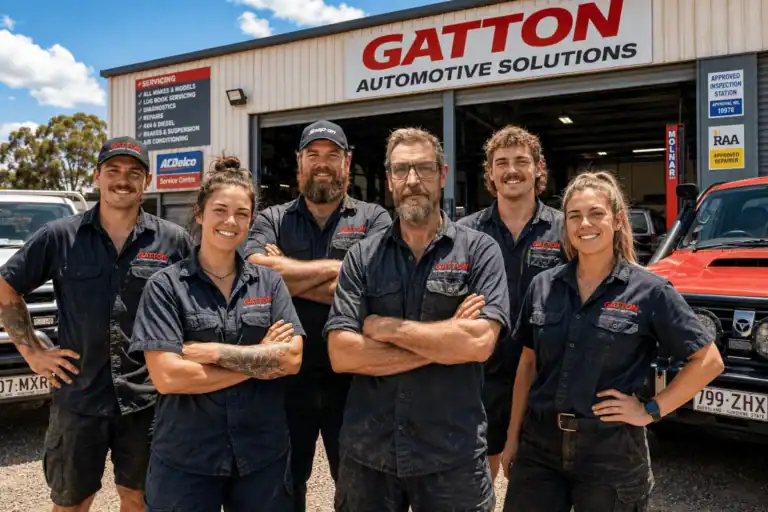
Gatton Automotive Solutions handles everything from passenger cars and family 4WDs through to heavy vehicles, trucks, and farm equipment. That breadth means we’re used to working with Mitsubishi’s full range, not just the common models. Our workshop is locally owned and based right here in Gatton, so you’re not driving to Ipswich or Toowoomba and back just to get your brakes looked at.

We issue roadworthy certificates on-site, which matters if your Mitsubishi needs a defect cleared or you’re buying or selling. With five-star reviews from local customers, the feedback speaks for itself. We do the work we say we’ll do, at a fair price, and we tell you straight what your vehicle needs.

If your Mitsubishi’s brakes are making noise, feeling different, or you simply haven’t had them looked at in a while, use the Book Your Free Inspection option online or Call Us Now and we’ll get your vehicle in.
Other Services

Whatever your needs we have you covered, see some similar services below or click "See All Services" to explore our full service offering.

Your Local Workshop for Every Vehicle

Gatton Automotive Solutions is the one-stop shop for cars, 4WDs, trucks, and heavy equipment. Honest advice and fair pricing, right here in Gatton.

Honest Pricing, No Surprises

We tell you what’s needed and what it costs before we start. No upselling, no pressure.

Everything Under One Roof

Bring your car in and we’ll inspect it, explain what we find, and quote you upfront.

Mitsubishi Brake System Specialists

We know Mitsubishi brake systems well, so faults get found and fixed first time.

How Mitsubishi Brake Repair Works

From booking your free inspection to confirmed safe braking, our Mitsubishi brake repair process is straightforward.

Step 1

Book Your Free Inspection

Call Us Now or book your free inspection online to have your Mitsubishi brakes assessed by our team.

Step 2

Brake System Assessment

We measure pad wear, rotor thickness, fluid quality, and test brake response to pinpoint what needs repair.

Step 3

Precision Brake Repair

We replace pads, rotors, or fluid using quality parts fitted to Mitsubishi specifications for safe stopping power.

Step 4

Safety Check and Collection

We road-test your brakes, explain the work completed, and hand over your Mitsubishi ready to drive safely.

Five-Star Rated

Verified 5★ Reviews

Quality Parts From Trusted Suppliers

We use genuine and quality aftermarket parts from reputable suppliers. You get reliable components backed by proper warranties.

Book Your Free Inspection

Tell us what you need and we'll get back to you with a clear quote.

Booking Form
  • Vehicle Details
  • Confirm Vehicle
  • Services
  • Contact Details
Honest Quotes
All Vehicle Types
Local & Reliable

Why Book With Us

Book Your Free Inspection
Drop Off Your Vehicle
We Get to Work
Collect Your Car

Frequently Asked Questions

Browse answers to common questions about our services. Can't find what you're after? Give us a call and we'll help.

Mitsubishi brake repair covers inspection, diagnosis, and replacement of any worn or damaged components in the braking system. That typically includes brake pads, rotors (the discs the pads clamp against), brake fluid, callipers, and brake lines. We start by measuring pad thickness and rotor wear, then test hydraulic pressure and check for any fluid leaks or calliper issues. Mitsubishi models like the Triton, Outlander, and ASX each have their own brake specifications, so we work to those rather than a generic standard. You’ll know exactly what needs doing before any work starts.

No. A soft or low brake pedal usually points to air in the brake lines or a hydraulic fluid problem, both of which reduce stopping power significantly. Driving on compromised brakes puts you, your passengers, and other road users at serious risk. If your pedal feels different from usual, pull over safely and have the vehicle inspected before driving further. This is one situation where getting it checked immediately genuinely matters, not something to book in for next week.

Under ACCC guidance, Australian consumer law generally does not require you to use a dealer for servicing or repairs to maintain your new car warranty, provided the work is carried out properly and appropriate parts are used. This is general information, not legal advice, and we’d always recommend checking your specific warranty terms if you’re unsure. Our team in Gatton services Mitsubishi vehicles regularly and uses parts that meet manufacturer specifications, so your logbook can be stamped as part of the process.

Yes. Mitsubishi Tritons, particularly those used for towing or on unsealed roads around the Lockyer Valley, can wear rear drum brakes faster than owners expect because of the load and dust exposure. Outlander AWD models occasionally develop uneven rotor wear if the electronic brake distribution system isn’t functioning correctly. ASX models are generally straightforward but benefit from regular fluid changes given their smaller brake fluid reservoir volume. Knowing these tendencies helps us look in the right places during an inspection rather than working through a generic checklist.

Brake pad life varies a lot depending on how and where you drive. City stop-start driving wears pads faster than highway kilometres. For Mitsubishi owners in and around Gatton doing a mix of town driving, rural roads, and towing, a brake inspection every 20,000 to 25,000 km is a reasonable guide, though your logbook service schedule is the best reference for your specific model. Brake fluid should generally be replaced every two years regardless of distance, as it absorbs moisture over time and this reduces its effectiveness.

Several things influence the final price: how many components need replacing, whether it’s front brakes, rear brakes, or both, and the specific Mitsubishi model involved. Triton utes and Pajero Sport wagons use heavier-duty components than a passenger car like the Mirage, so parts costs differ. Labour time also varies if callipers or brake lines need attention beyond a straightforward pad and rotor swap. We’ll give you a clear price before starting any work, with no surprises added at the end.

A standard pad and rotor replacement on most Mitsubishi models is typically completed within one to two hours. If additional work is needed, such as calliper replacement, brake line repairs, or drum brake servicing on a Triton, the job will take longer. We’ll give you a realistic time estimate once we’ve assessed the vehicle. In many cases, straightforward brake repairs can be turned around the same day, so you’re not left without transport for longer than necessary.

The most common signs are squealing or grinding noises when braking, a vibration through the brake pedal, the vehicle pulling to one side when you slow down, or a longer stopping distance than usual. A lit brake warning light on the dashboard also warrants a prompt inspection. Worn brake pads often have a built-in wear indicator that produces a high-pitched squeal specifically to alert you. Don’t ignore these signals, as catching brake wear early generally means less damage to rotors and a lower repair cost overall.

Continue to site