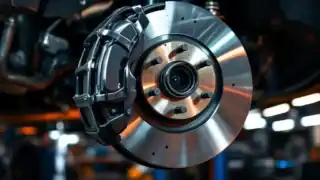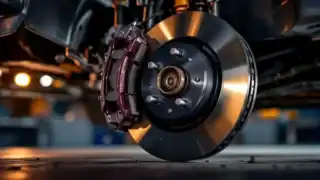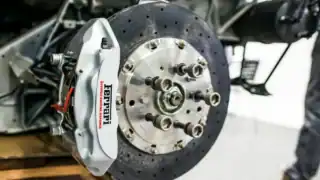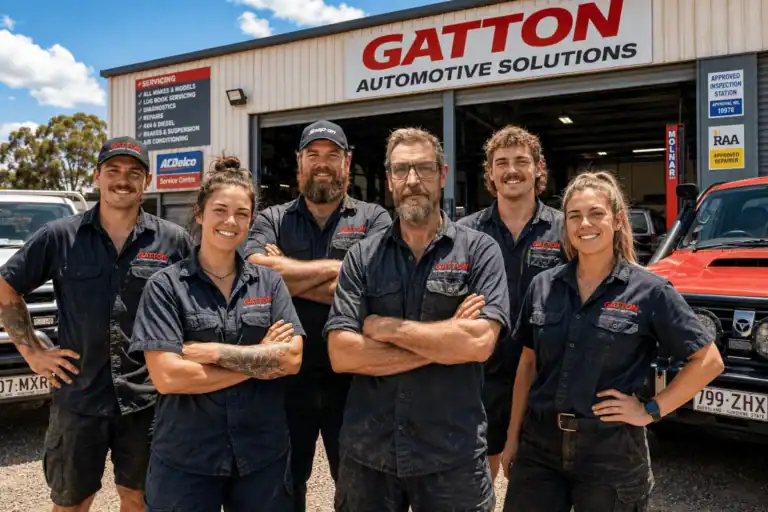
BMW brakes are engineered to work with some of the most performance-focused suspension and drivetrain systems on Australian roads, which means when something goes wrong with the braking system, the effects are felt throughout the whole car. Getting a proper BMW brake repair from a workshop that understands the make matters more than it might with a simpler vehicle. At Gatton Automotive Solutions, we handle BMW brake work for drivers across the Lockyer Valley who’d rather not make the trip to Ipswich or Toowoomba every time they need something done.
Signs Your BMW Needs a Brake Inspection
BMW’s condition-based servicing (CBS) system will often flag brake wear through the instrument cluster before you notice anything physical. If you see a brake pad warning light, that’s the wear sensor telling you the pads have reached their minimum thickness. Don’t ignore it. By the time you’re hearing a grinding noise, you’ve likely moved from a pad replacement to a job that involves rotors as well.
Other warning signs are worth knowing too, particularly because BMWs can mask some symptoms better than older vehicles do:
- Vibration or pulsing through the brake pedal when you slow down, which usually points to rotor warping or uneven wear
- Pulling to one side under braking, which can indicate a sticking calliper or uneven pad wear between sides
- A spongy or low pedal feel, which sometimes points to air in the brake lines or a deteriorating master cylinder
- Squealing during light braking, which is sometimes the wear indicator doing its job, but can also be glazed pads or dusting from European-spec compounds
- Longer stopping distances than you expect, particularly noticeable in performance variants like the 3 Series, 5 Series, or X5 where the braking response is normally sharp
If you’re noticing any of these, book a brake inspection rather than waiting for your next scheduled service.
What a BMW Brake Repair Involves at Our Workshop
We don’t guess with BMW brakes. The first step is always a thorough inspection, which means pulling the wheels, measuring pad thickness and rotor depth with gauges, checking calliper condition and slide pin movement, and looking at the brake fluid for moisture contamination.
BMWs fitted with electric parking brake systems, which includes most current 3 Series, 5 Series, and X5 models, require a scan tool to retract the rear callipers before the pads can be replaced. This isn’t a job that can be done by hand the way an older mechanical handbrake setup would allow. Our diagnostic equipment supports BMW’s electronic systems, so we’re not working around the car’s technology.
We also check the CBS data and any fault codes related to ABS, DSC (dynamic stability control), or the brake pressure sensor. On BMWs, these systems are deeply integrated, and a fault in one area can affect how the whole braking system performs. If we find something outside the scope of the brake repair itself, we’ll tell you clearly what it is and what it means before any further work is done.
Parts and Fluid Choices for BMW
BMW specifies DOT 4 brake fluid as standard, with some M-series applications requiring a higher dry boiling point fluid. We source parts that meet OEM specifications, which for a BMW means matching compound hardness, rotor metallurgy, and calliper seal materials to what the car was designed for. Fitting budget-grade pads to a BMW that came with high-performance brakes from the factory will change the pedal feel and stopping character of the car, and not for the better.
What Affects the Cost of BMW Brake Repairs in Gatton?
A few variables determine how much a brake repair costs on any BMW. Pad-only replacements on a well-maintained vehicle sit at the simpler end. Once rotors are involved, the cost increases, and on BMW the rotors are often on the larger side, particularly for performance and SUV variants. Front and rear axle brakes wear at different rates on most BMWs because of weight distribution and the car’s tendency to brake nose-heavy, so it’s common to replace fronts more frequently than rears.
Calliper work adds to the job. Seized slide pins are a fairly routine finding on high-kilometre BMWs and, if left, will cause uneven pad wear that shortens the life of new pads quickly. We’ll flag this during inspection. Parts sourcing is handled in-house, so you’re not waiting on external orders before the job can proceed.
Why Lockyer Valley BMW Owners Choose Gatton Automotive Solutions
There’s a practical reason local BMW owners use us rather than driving to a city service centre. We’re a full-service workshop in Gatton covering everything from routine servicing through to roadworthy certificates, suspension work, tyre fitting, and smash repairs, all under one roof. BMW brake repair sits within a broader mechanical capability that means if we find something else during the inspection, it can often be addressed at the same visit.
We’ve built a reputation here on honest advice and fair pricing. We don’t replace parts that don’t need replacing, and we tell you clearly what we’ve found before the work starts. With five-star reviews from local drivers, that approach speaks for itself.
If your BMW’s brakes are due for attention, Call Us Now or use the online form to Book Your Free Inspection. We’re easy to reach from Gatton and across the Lockyer Valley, and we’ll tell you exactly what your car needs before a spanner is turned.