Mazda brake repair is one of the most common jobs we handle at Gatton Automotive Solutions, and for good reason. Mazda builds reliable, well-engineered cars, but the braking system still wears over time, and when it does, you need a mechanic who understands how these vehicles are put together. Whether you’re driving a Mazda 3 around town, hauling gear in a BT-50 through the Lockyer Valley, or commuting in a CX-5, getting your brakes inspected and repaired promptly keeps you safe and protects your vehicle from more costly damage later on.
Warning Signs Your Mazda’s Brakes Need Attention
Brakes rarely fail without warning. Most Mazda owners notice something’s off well before the situation becomes dangerous, but it’s easy to dismiss the early signs as minor or something that can wait. Here’s what we see regularly at the workshop:
- Squealing or squeaking when braking – the wear indicators on Mazda brake pads are designed to make this noise when the friction material is running low. Don’t ignore it.
- Grinding or a harsh metal-on-metal sound – this usually means the pads are worn completely through and the caliper bracket or backing plate is contacting the rotor. Rotor damage is likely at this point.
- A pulsing or shuddering feeling through the brake pedal – often caused by warped rotors, which is something we see quite frequently on Mazda CX series and 3 models that do a lot of mixed highway and stop-start driving.
- The car pulling to one side under braking – this can point to a stuck caliper, uneven pad wear, or a fluid issue on one side of the axle.
- A soft or spongy pedal – if the pedal feels different to usual, or sinks further than normal before the brakes bite, that’s a hydraulic concern that needs investigating immediately.
- The brake warning light coming on – some Mazda models use electronic wear sensors alongside the mechanical ones. If that light comes on, don’t wait.
If any of these sound familiar, book a brake inspection sooner rather than later. Brake repairs on a Mazda are almost always less expensive and less involved when caught early.
How We Inspect and Repair Mazda Brakes
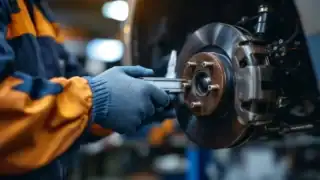
We start with a visual inspection before anything comes apart. That means checking pad thickness on all four corners, looking at rotor condition, and assessing caliper operation. On Mazda vehicles, we also pay attention to the electronic parking brake systems found on models like the CX-5 and CX-9 from 2017 onwards. These rear calipers contain an integrated electric motor, and they require specific scan tool procedures to retract the piston before the pads can be changed. Using the wrong method on these systems can damage the caliper or throw a fault code.
We check brake fluid condition and level as part of every brake inspection. Mazda’s service schedule calls for brake fluid replacement every two years regardless of how the fluid looks, because moisture absorption degrades braking performance over time even when the fluid appears fine visually. If the fluid hasn’t been changed recently, we’ll let you know.
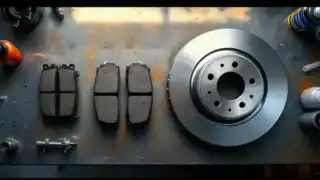
Where pads are replaced, we use parts that meet OEM specifications for friction rating and fitment. For rotors, we assess whether machining is viable or whether replacement is the better call. On most modern Mazdas, rotors are relatively thin from the factory and don’t always have enough material for a safe machine cut once they’ve worn. We’ll give you a straight answer on what actually needs doing rather than recommending work that isn’t necessary.
What Affects the Cost and Time Involved
Brake repair costs vary depending on which axle needs attention, what components need replacing, and whether the job involves the standard hydraulic calipers or the electronic rear setup found on newer Mazda models. Parts availability for Mazda is generally good, which keeps lead times manageable. OEM-equivalent parts that meet Mazda’s friction and dimensional specs are typically available locally, and we handle parts sourcing in-house so you’re not chasing anything down yourself.
A straightforward front pad and rotor replacement on a Mazda 3 or CX-5 is generally a same-day job. More involved work, like a caliper rebuild or brake line replacement, takes longer. We’ll give you an honest estimate before any work starts, and we won’t add jobs to the invoice that weren’t discussed first.
Brake Repairs for Mazda Drivers in and Around Gatton
One of the common frustrations for drivers in this area is having to travel to Ipswich or Toowoomba for work that should be available locally. Gatton Automotive Solutions handles Mazda brake repairs in-house, from routine pad replacements through to caliper replacements and brake fluid flushes. We work on Mazda 2, Mazda 3, Mazda 6, CX-3, CX-5, CX-9, BT-50, and other models across the range.
Our workshop covers far more than brake work. From general mechanical repairs and logbook servicing through to roadworthy certificates, suspension upgrades, tyre fitting, smash repairs, and heavy vehicle and equipment servicing, it’s a full-service facility. If there’s something else going on with your Mazda alongside the brakes, we can look at the whole picture rather than just the single job.
We’re locally owned and operated in Gatton, and we’ve built a reputation here on straightforward advice and work done properly. Our five-star reviews reflect that. If you’ve noticed any of the symptoms above, or you’re simply due for a brake check, Call Us Now or Book Your Free Inspection online today.