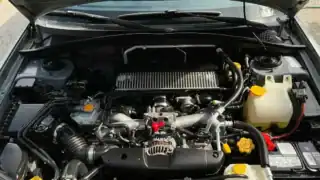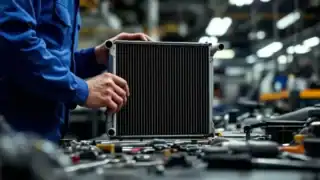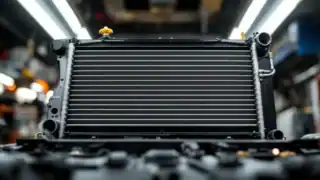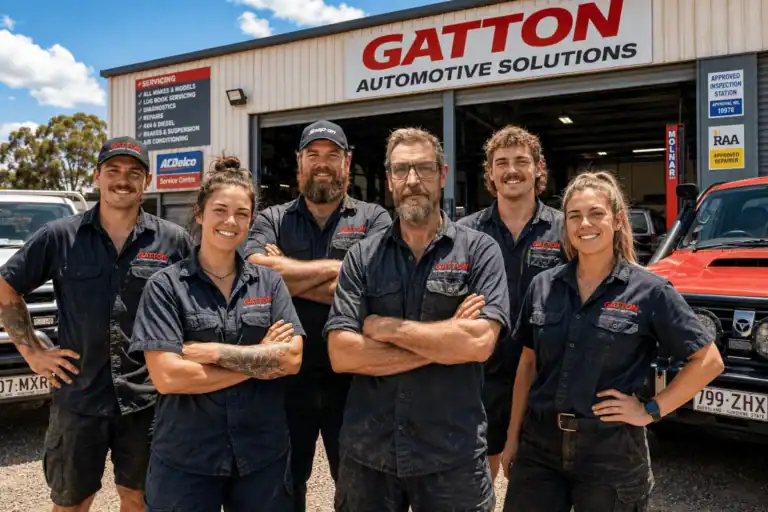
A Honda radiator repair isn’t something most drivers think about until the temperature gauge climbs or coolant appears on the driveway. The radiator sits at the centre of your engine’s cooling system, drawing heat away from the engine and releasing it through the front of the vehicle. When it’s working well, you’ll never give it a second thought. When it’s not, the consequences move quickly from inconvenient to expensive. At Gatton Automotive Solutions, we handle Honda radiator repair and coolant leak diagnosis for drivers across Gatton and the Lockyer Valley, sorting everything from minor hose leaks to cracked tanks and full radiator replacements.
Signs Your Honda Needs Radiator or Coolant Attention
Honda engines are generally reliable, but the cooling systems in older Civics, CRVs, Accords, and Jazz models have known tendencies worth knowing about. The plastic end tanks on many Honda radiators from the late 1990s through mid-2000s can become brittle over time, cracking at the seams where they meet the aluminium core. This often starts as a weep leak, easy to miss, before it develops into something more serious.
Here are the warning signs that usually bring Honda owners in to see us:
- Coolant pooling under the front of the vehicle, often bright green or pinkish-red depending on the Honda-spec fluid
- Temperature gauge sitting higher than normal or rising and falling erratically during a drive
- Sweet smell coming from the engine bay or through the cabin vents
- White residue or staining around hose connections, the radiator cap, or at the base of the tank
- Low coolant warning light appearing on the dashboard without an obvious cause
- Coolant that looks rusty, oily, or discoloured, which can point to internal contamination or a head gasket concern
If your Honda is overheating, stop driving it. Continuing to run an overheating engine, even for a short distance, can warp the cylinder head and turn what might have been a straightforward radiator job into a much larger repair.
What Honda Radiator Repair Involves at Our Workshop
We start with a proper inspection rather than guessing. Our technicians pressure-test the cooling system, which involves sealing it and introducing controlled pressure to reveal leaks that aren’t visible during a cold static inspection. A leak that only appears under operating temperature can easily be missed without this step.
From there, we assess the radiator itself: core condition, tank integrity, the state of the upper and lower hose connections, and the radiator cap. Honda’s OEM cap specs matter here. A cap that no longer holds the correct pressure lets the system lose coolant without any obvious external leak, and it’s a detail that gets overlooked in a quick visual check.
We also inspect the thermostat and coolant temperature sensor where relevant, since both can contribute to temperature issues that look like radiator problems on the surface. Honda’s coolant flush intervals and fluid specifications are worth following closely. Honda recommends its own blue coolant for many models, and mixing incompatible coolant types can cause internal corrosion and sediment buildup that shortens the life of a new radiator. We use Honda-compatible coolant and flush out any old or contaminated fluid as part of the repair process.
Repair or Replace?
Not every Honda radiator needs a full replacement. Small leaks at hose connections or from a failed gasket can often be repaired. But if the core is damaged, the plastic tanks are cracked, or the radiator has significant internal sludge, replacement is the more reliable path. We’ll tell you clearly what we find and what makes sense for your situation and your vehicle’s age and mileage, without pushing unnecessary work.
What Affects the Cost of a Honda Radiator Repair?
Several factors shape the final cost. The nature and location of the leak matters. A hose replacement is straightforward; a full radiator replacement takes longer and involves the cost of the part itself. Parts availability is another variable. For common Honda models like the Civic, CRV, and Odyssey, quality replacement radiators are generally available locally or with short lead times. Less common models may take longer to source.
The choice between OEM-equivalent and genuine Honda parts also affects pricing. We’ll walk you through the options and what each means for your vehicle’s long-term reliability. We handle parts sourcing in-house, which saves you the hassle of running around to find the right part yourself.
Why Gatton Drivers Get Their Honda Cooling Work Done Here
Gatton Automotive Solutions is a full-service workshop covering cars, 4WDs, trucks, and heavy equipment, all under one roof. Honda cars are a regular part of our work here. For something like a coolant system repair, that breadth matters because cooling issues don’t always stay isolated. If your Honda has an overheating concern that turns out to involve more than just the radiator, we can handle the broader diagnosis and any additional repairs without sending you elsewhere.
We’re locally owned and operated in Gatton, which means you’re not driving to Ipswich or Toowoomba and back for work that can be done right here. Our pricing is straightforward, and we don’t recommend repairs that aren’t genuinely needed. With five-star reviews from drivers across the Lockyer Valley, the feedback we hear most often is that people appreciated being told exactly what was wrong and what it would cost before any work began.
If your Honda is showing any signs of a coolant leak or temperature issue, don’t leave it to chance. Call Us Now or Book Your Free Inspection online, and we’ll get it properly diagnosed and sorted here in Gatton.